SUMMER 2024 VOLUME 70 NUMBER 2
PLANT SCIENCE
BULLETIN
A PUBLICATION OF THE BOTANICAL SOCIETY OF AMERICA
Using General Interest Science Books to Arouse Student
Interest and to Substitute for an Introductory Textbook
by Marsh Sundberg... p. 152
Also In this issue...
See the BSA Award Winners!
Summer 2024 Volume 70 Number 2
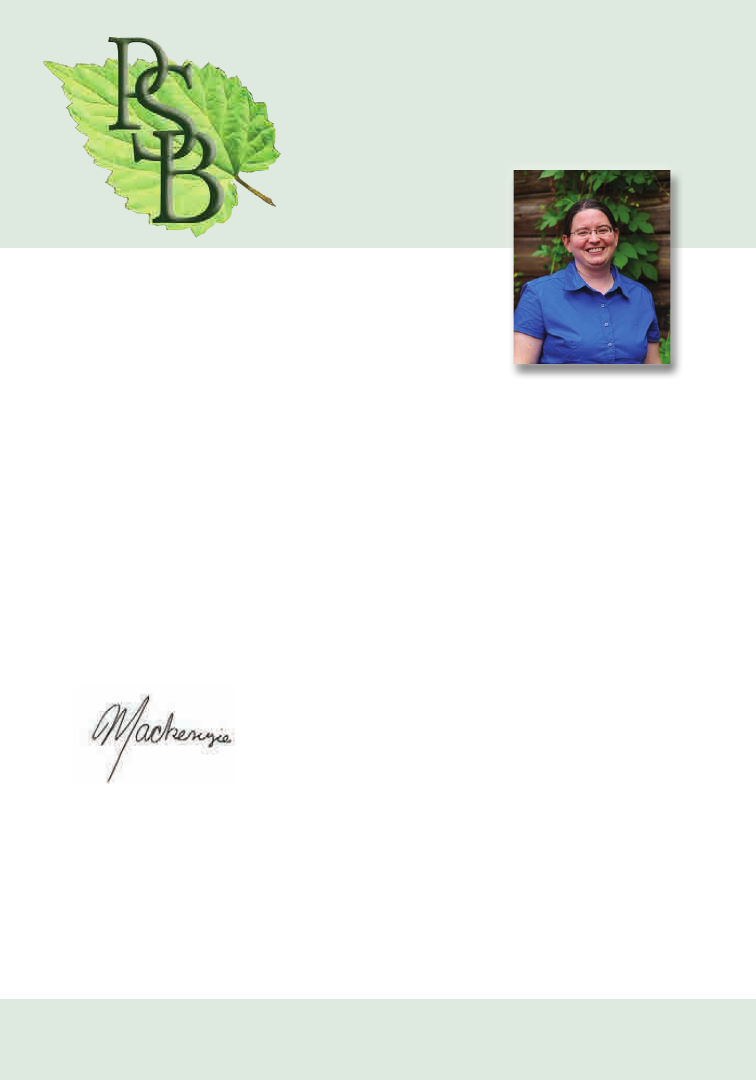
FROM the EDITOR
Sincerely,
Greetings,
You may have noticed that we are publishing our summer issue a bit later than usual
this year. This is so we can include news and reports from Botany 2024, which was
held in June due to the occurrence of the XX International Botanical Congress. There
will be even more post-conference content in our Fall issue! This issue also includes a
look inside the role of the BSA president, written by Past President Brenda Molano-
Flores and an update from the Public Policy Committee. In our peer-reviewed article
section, look for an article by Marsh Sundberg with advice for using general interest
science books in teaching.
PSB 70 (2) 2024
126
126
By
Brenda Molano-
Flores
BSA Past President
E-mail: molano1@il-
linois.edu
SOCIETY NEWS
I cannot believe that a year has already passed
since the Botany 2023 meeting in Boise, ID
where I became your President. In actuality,
though, my presidential commitment did not
begin at Botany 2023, but rather a year earlier
at Botany 2022 in Anchorage, AK when I
became President-Elect. And while my term
as President ended at Botany 2024 in Grand
Rapids, MI, you will not be rid of me yet, as
I will become Past-President until Botany
2025 in Tucson, AZ! Although President for
just a year, my service to BSA is a three-year
commitment.
In this retrospective, I would like to share
my journey and what I have learned as your
BSA President and President-Elect. During
my time as President-Elect, I was like a fly on
the wall listening to everything that President
(Vivian Negrón-Ortiz), Past-President
(Michael Donoghue), and BSA Executive
Director (Heather Cacanindin) said during
our Board meetings and special sessions. This
A Retrospect: A Year (or Three) in
the Life of a BSA President
was my time to get up to speed and learn the
ins and outs of what would be expected of me
as President. As the President Elect, I was
also the Chair of the best committee ever (-:,
get this—the Committee on Committees!!!
This position allowed me to learn more
about each of the BSA committees and work
with an excellent group of people to make
sure that all of our BSA committees had the
expertise and representation needed for
them to be successful. In addition, I was an
ad-hoc member of two other committees:
Distinguished Fellow and Emerging Leader
Award Committee and Charles Edwin Bessey
Teaching Award Committee.
One more thing—although not a main role
of the President-Elect—I became one of two
BSA steering committee members of the NSF
Root and Shoot group (https://rootandshoot.
org/). The ROOT & SHOOT program is a
collaborative effort among seven scientific
societies (including BSA) to address issues
associated with DEI within and among the
participating societies. Being a part of this
group gave me the opportunity to learn new
ways to make our society and meetings more
inclusive and safer. Lastly, I was a member
of the ROOT & SHOOT Capstone Project
Team - BSA Election Processes, Outcomes,
and Recommendations for Reform with
Catrina Adams, Min Ya, and Imeña Valdes.
PSB 70 (2) 2024
127
For a summary of the project, go to: https://
rootandshoot.org/bsa-capstone-bsa-election-
processes-outcomes-and-recommendations-
for-reform/.
At Botany 2023, I officially became your
President (2023-2024). Well, I can tell you that
my presidential speech was the most stressful
part of this entire presidency! Thinking about
what to talk about and how to keep an audience
engaged after they had already experienced
three days of amazing talks, posters, and
dedicated events was nerve-wracking! I
figured the last thing anyone would want to
see after so many days of presentations would
be more data, charts, and graphs, so I went
a different route. I decided to talk about the
joy I find in botany and to ask the audience
where they find plant joy. At the end of my
presentation, I posed the question, “Where
do you find plant joy?” and I was so thrilled
to see how many of you took a turn to share
your plant joy as we passed the mic around! I
was also amazed to see that my talk sparked
a #plantjoy campaign and that so many of
you posted your stories and photos of where
you find plant joy across our social media
platforms. That truly brings me #plantjoy!
After my presidential talk was over, my absolute
favorite part of any Botany Conference began:
the celebration, and by that, I mean the
dancing! After a last-minute cancellation, a
new band had to be found for the celebration.
A local band, Jimmy River and the Groovers,
was found (thanks to Ingrid Jordon-Thaden),
and boy did we groove! As Jimmy later said
on his Facebook post, “These people danced,
sang, made conga lines, did the limbo, etc.
I could go on. Wow! I am here to tell you
that botanists are party people!” I will admit
that the best part of that night was the joy of
dancing with so many of you and celebrating
that night together. And jumping around
with those glo-sticks! Where did those come
from? What fun!
After the pomp and circumstance of my
inauguration ball was over, I put on my
presidential hat and got to work. Every two
weeks I have looked forward to my Friday
meetings with Heather. During these
meetings we talk about the progress of BSA
Strategic Plan initiatives, concerns of our
members, awards, BSA partnerships with
other societies, and past Botany Conferences
and those to come. Other duties of my
presidency included leading the BSA Board
meetings, conducting the annual evaluation
of our Executive Director with assistance
from other board members, and approving
her monthly timesheets.
On several occasions during my term, I was
able to assist with conflict resolution and
to provide a space for open discussion and
communication. Also, I was able to interact
with the leadership and members of other
scientific societies as part of ROOT & SHOOT.

PSB 70 (2) 2024
128
By the time you read this retrospect, I will
have ended my term as President, and I
will be your Past-President (2024-2025).
Because of the IBC, my presidency was only
11 months because our annual meeting
was moved up one month earlier. (Sorry to
soon-to-be President, Jenny Xiang, as your
presidential gig will be 13 months!) As Past-
President I will continue my participation
with the society by serving as the Chair of
the Election Committee, by doing my best to
implement the changes recommended as part
of our ROOT & SHOOT Capstone Project
(mentioned above), and by continuing to
engage with our members. I am here to listen,
and I hope that you will continue to share your
thoughts and concerns with me about BSA
and our conference. Also, during this period,
I plan to focus on engaging federal and state
agencies and developing partnerships with
them. Increasing the participation of agency
botanists in BSA is a special aspiration of
mine.
As I look back, I am thankful that I was
nominated, and that you elected me to be
your President. It has been a blast!!! I have
furthered my leadership skills, met and
worked with so many thoughtful and hard-
working people, and had an amazing time
heading up the #plantjoy campaign and seeing
your responses. So, remember, it is never too
early or too late to get involved in BSA, and I
hope that you will consider doing so. We are
always looking for good people to serve on or
chair our committees or become part of the
Executive Board. BSA is the premier botanical
organization of the United States and we strive
to be the best in the world. And I am here to
tell you—botanists are party people!
These interactions reinforce that BSA as an
organization continues to seek pathways to
address all aspects of DEI, and to navigate the
geopolitical and socioeconomic landscape
of a changing world—and that we need to
do more to make sure that we show that we
value every member of BSA. Lastly, and when
possible, I provided feedback for our amazing
and informative BSA newsletter (many thanks
to Membership & Communications Manager
Amelia Neely). And I do not know if you
noticed, but even my photo at the end of the
newsletter became more presidential—go and
check earlier issues and the last newsletter and
you will see what I am talking about. (-:
As your President I can attest to the
commitment to service of the Executive
Board, the members and chairs of the many
committees, and the BSA staff. Our student
representatives are also active and looking
after the well-being of their fellow students.
Our DEI committee is making sure that we
do not lose track of our commitments to
diversity, equity, and inclusion and that we
are transparent with the decisions that we are
making. Also, it has been impressive to see
behind the scenes of all that putting together
a Conference and Conference Program
entails (many thanks to Johanne Stogran and
Melanie Link-Perez). All the work that goes
into this—sometimes years in advance!—is
amazing to see.
PSB 70 (2) 2024
129
Dr. Steven Neil Handel
Rutgers University
Botanical Society of America’s
Award Winners
Distinguished Fellow of the Botanical Society of America
The “Distinguished Fellow of the Botanical Society of America” is the highest honor our Society
bestows. Each year, the award committee solicits nominations, evaluates candidates, and selects
those to receive an award. Awardees are chosen based on their outstanding contributions to the
mission of our scientific Society. The committee identifies recipients who have demonstrated
excellence in basic research, education, public policy, or who have provided exceptional service to
the professional botanical community, or who may have made contributions to a combination of
these categories.
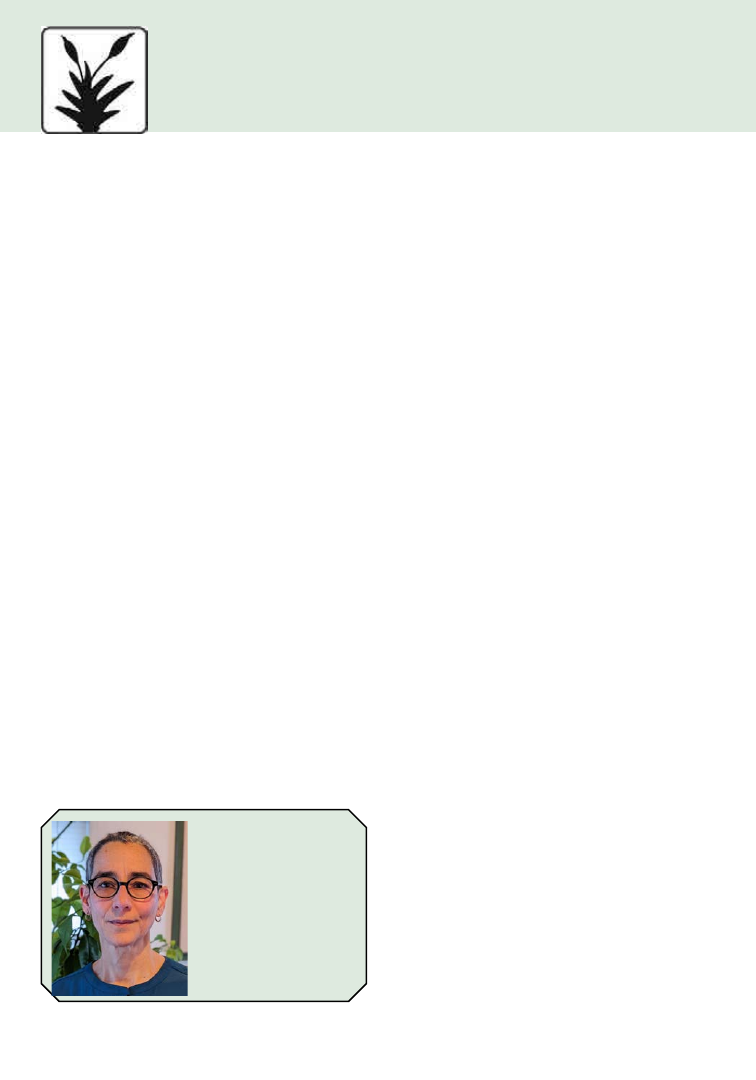
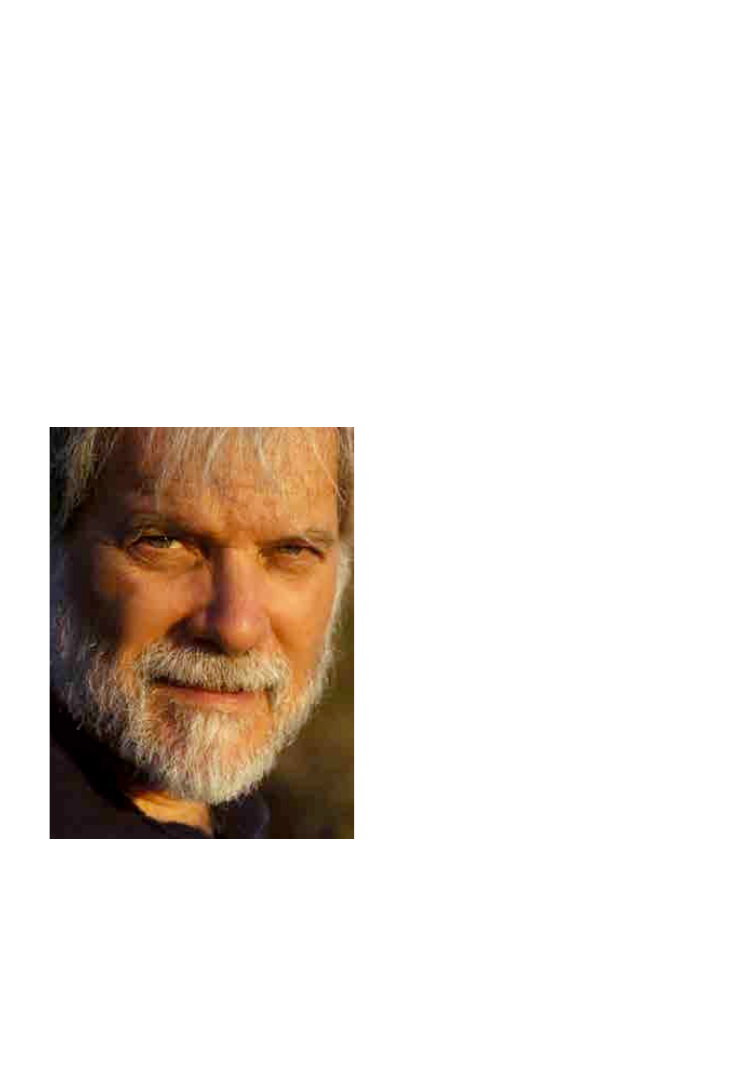
Steven Handel, Distinguished Professor
of Ecology and Evolution at Rutgers, is an
internationally recognized botanist who has
experimentally explored mutualisms, plant
population growth, ecological genetics, and
now applies these findings to the ecological
restoration of urban degraded lands. Dr.
Handel aims to understand new ecological
restoration protocols, based on a botanical
foundation, and use these in the design of
public lands by collaborating with landscape
architects. This groundbreaking collaboration
is a hallmark of his recent work and opens
new doors for the application of botanical
knowledge to the public sphere. Dr. Handel’s
collaborative efforts with landscape architects
and urban planners have been instrumental in
transforming degraded urban landscapes into
thriving ecosystems. As examples, projects
such as the restoration of Brooklyn Bridge
Park and the Jamaica Bay Wildlife Refuge,
exemplify his commitment to integrating
scientific rigor with practical application.
He has been a BSA member for 40 years, the
Genetics Section chair, served on several BSA
committees and the advisor of four Young
Botanist Awardees. Dr. Handel’s dedication to
PSB 70 (2) 2024
130
education is evident through his mentorship of numerous graduate students and in the many
nomination letters we received. Working with Dr. Handel is a pleasure. He teaches his students
and post-docs how to encourage and to mentor, to be curious and enjoy life, and to remember
the humanity of the people they are teaching and to use kindness always.
Dr. Handel is leaving a lasting impact on the field of botany and ecological restoration. His
work continues to inspire and educate, emphasizing the vital intersection of several disciplines.
Dr. Handel’s actions to improve the botanical components of public landscapes has expanded
the reach of our field in important new ways and we are pleased to honor him with this
Distinguished Fellows Award.
Charles Edwin Bessey Teaching Award
(BSA in association with the Teaching Section and Education Committee)
Dr. Joan Edwards
Williams College
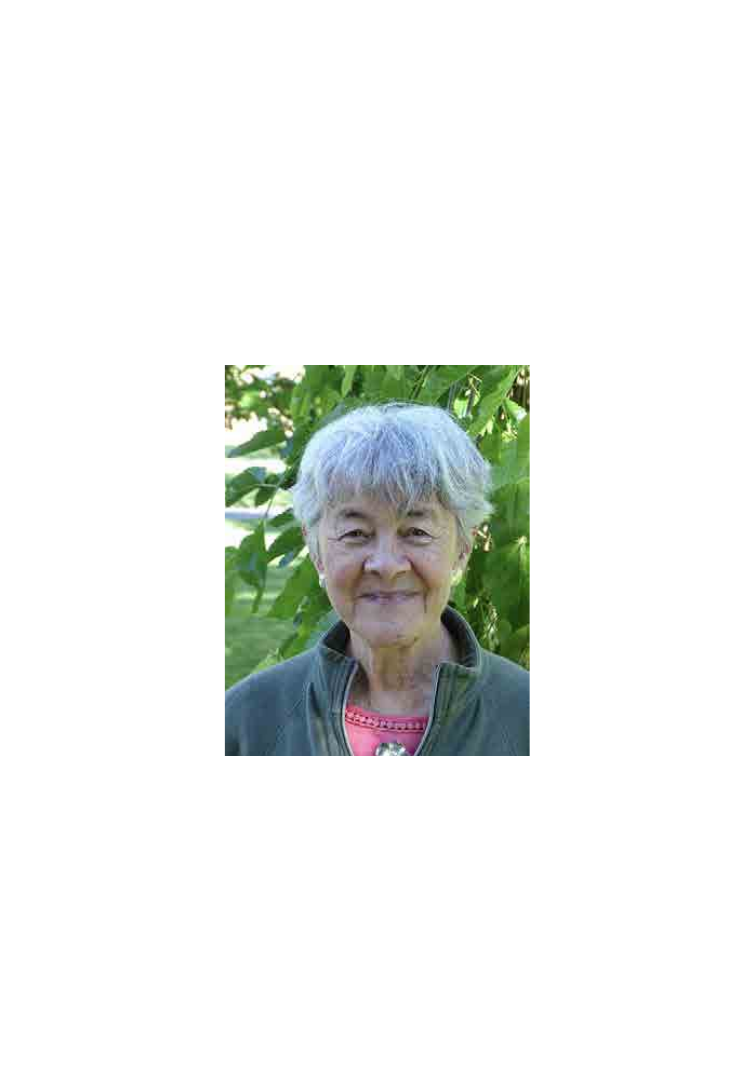
Dr. Joan Edwards, a professor at Williams College for five decades, has shaped a career
characterized by an unwavering commitment to nurturing the next generation of botanists and
environmental stewards. Through her innovative teaching methods, she has instilled a sense
of curiosity and wonder in countless students. As one of her nominators pointed out, “Very
few faculty members at any higher education institution have the stamina to remain in their
position this long, and even fewer do so while not only maintaining their teaching and research
standards, but continuing to pioneer and adjust to changes in technology, student needs, and
pedagogical understanding in the way that Dr. Edwards has.”
PSB 70 (2) 2024
131
Her courses, such as Field Botany and
Conservation Biology, have served as
catalysts for intellectual growth, fostering
interdisciplinary exploration and hands-
on research experiences. Dr. Edwards has
remained dedicated to student-centered
research, teaching the value of observation,
curiosity, interconnection, integration, and
that the unexpected is always interesting. She
has cultivated a collaborative environment
where students are empowered to make
meaningful contributions to the field. One
of her former students stated, “Joan’s ability
to convey the excitement and wonder of
biological phenomena and then make the
underlying concepts (whether physical,
molecular, developmental, ecological, or
evolutionary) seem simple and accessible to
all of her students is the core of her approach
to teaching.”
Beyond the classroom, Dr. Edwards’s outreach
efforts transcend boundaries, engaging with
the broader community to foster conservation
efforts and a deeper appreciation for the
natural world. Dr. Edwards epitomizes the
essence of excellence in botanical teaching,
embodying a profound passion for plants
and a steadfast dedication to inspiring future
generations of botanical enthusiasts.
BSA Emerging Leader Award
The Emerging Leader Award of the Botanical
Society of America is given annually in recognition
of creative and influential scholarship as well as
impact in any area of botany reflecting the breadth of
BSA. Awardees have outstanding accomplishments
and also have demonstrated exceptional promise
for future accomplishments in basic research,
education, public policy, exceptional service to the
professional botanical community, or a combination
of these categories.
Dr. Aaron S. David
Archbold Biological Station
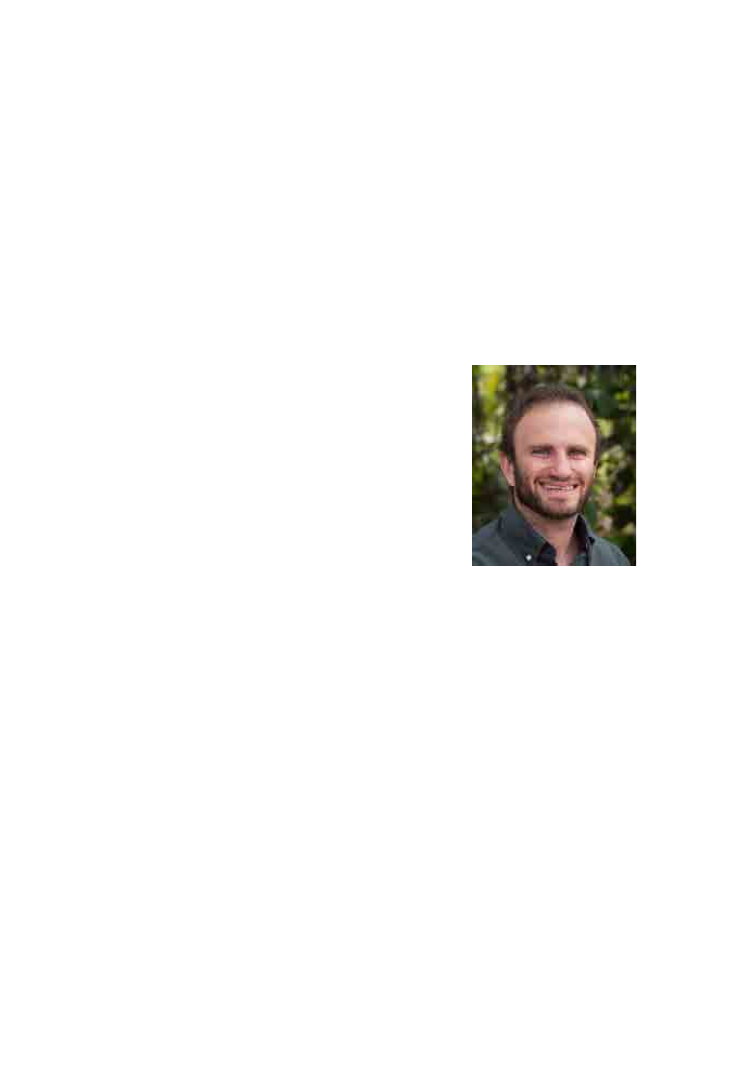
Dr. Aaron David received his PhD from the
University of Minnesota in 2016. From his
early days as a postdoctoral researcher to his
current role as the Director of the Plant Ecology
Lab at Archbold Biological Station, Aaron’s
pioneering research stands as a testament to
his innovative thinking and commitment to
addressing pressing ecological challenges.
Dr. David’s expertise spans various disciplines,
from sequencing and plant biology to modeling
and computer programming, laying a solid
foundation for his subsequent contributions
that bridge the gap between plant population
demography and microbiology to understand
the intricate dynamics of threatened and
endangered plant species. His work with
PSB 70 (2) 2024
132
Donald R. Kaplan
Memorial Lecture
This award was created to promote research
in plant comparative morphology, the Kaplan
family has established an endowed fund,
administered through the Botanical Society
of America, to support the Ph.D. research of
graduate students in this area.
Dr. Cynthia Jones
University of Connecticut
endangered plant species like Hypericum
cumulicola has not only deepened our
understanding of plant-microbial interactions
but also shed light on the intricate mechanisms
driving population dynamics.
His scientific integrity, collaborative ethos,
and proactive approach to conservation
underscore his potential to shape the future of
plant biology and environmental stewardship.
As he continues to push the boundaries
of scientific inquiry and inspire the next
generation of scientists, BSA is proud to honor
him with the Emerging Leader Award.
Impact Award
The Botanical Society of America Impact Award
recognizes a BSA member or group of members
who have significantly contributed to advancing
diversity, accessibility, equity, and/or inclusion in
botanical scholarship, research and education.
Dr. Kristine Callis-Duehl
Driemeyer Executive
Director of Education

PSB 70 (2) 2024
133
BSA CORRESPONDING MEMBERS AWARD
Corresponding members are distinguished senior scientists who have made outstanding
contributions to plant science and who live and work outside of the United States of America.
Corresponding members are nominated by the Council, which reviews recommendations and
credentials submitted by members, and elected by the membership at the annual BSA business
meeting. Corresponding members have all the privileges of life-time members.
Dr. Else Marie Friis, Museum of Natural History, Stockholm, Sweden
Dr. Mark Olson, Universidad Nacional Autónoma de México, Ciudad de México, México
THE BSA DEVELOPING NATIONS TRAVEL GRANTS
Elton John de Lírio, University of São Paulo, Brazil
Carina I. Motta, Universidade Estadual Paulista Júlio de Mesquita Filho, Rio Claro, Brazil
Boniface Ngarega, Oklahoma State University, USA
Malka Saba, Quaid-i-Azam University, Islamabad, Pakistan
Jackeline Salazar, Universidad Autónoma de Santo Domingo, Dominican Republic
Anju Batta Sehgal, Retd. Principal Govt. College Hamirpur Himachal Pradesh, India
Prabha Sharma, University of Delhi, India
THE BSA PROFESSIONAL MEMBER TRAVEL GRANTS
Kelsey J.R.P. Byers, John Innes Centre
Elton John de Lírio, University of São Paulo
Lekeah Durden, Central Michigan University
Elizabeth McCarthy, SUNY Cortland
Pedro Henrique Pezzi, University of Arkansas
Prabha Sharma, University of Delhi

PSB 70 (2) 2024
134
BSA MEMBER TRAVEL GRANTS TO ATTEND THE IBC
Erin G. Bentley, University of Wyoming
Patricia W. Chan, University of Wisconsin-Madison
David Hoyos, Instituto Multidisciplinario de Biología Vegetal (IMBIV-CONICET)
Masoumeh Khodaverdi, University of Vermont
Andrew E. McDougall, The University of Adelaide
Juan Pablo Ortiz Brunel, Universidad de Guadalajara
Resmi Sekarathil, Botanical Survey of India
Aleena Xavier, Indian Institute of Science Education and Research Bhopal
AWARDS FOR ESTABLISHED SCIENTISTS
GIVEN BY THE SECTIONS
Hermann Becker Student Field Work Grant
(Paleobotanical Section)
Niall Whalen – Florida State University
Remy, Remy, and Winslow Award
(Paleobotanical Section)
Eva Maria Silva Bandeira – University of Kansas
For the paper: The oldest record of reproductive structure of Nothofagaceae and Proteaceae from
the Campanian of Antarctica. Co-Authors: Ari Iglesias, Brian Atkinson, Mauro Passalia, Pablo
Picca and Selena Smith
Emma Casselman – California State Polytechnic University, Humboldt
For the paper: Characterizing and distinguishing early euphyllophytes with woody growth based
on secondary xylem anatomy: method development and applications. Co-Author: Alexandru
M.F. Tomescu
Ellie Frazier – California State Polytechnic University, Humboldt
For the paper: Early steps in pith evolution: euphyllophytes of the Lower Devonian Battery Point
Formation of Gaspé (Quebec, Canada). Co-Author: Alexandru M.F. Tomescu

PSB 70 (2) 2024
135
Madison Lalica – California State Polytechnic University, Humboldt
For the paper: Plant periderm as a continuum in structural organization: a tracheophyte-wide
survey and hypotheses on evolution. Co-Author: Alexandru M.F. Tomescu
Meg Nibblelink – University of Kansas
For the paper: A rare lycopod macrofossil from the Triassic of Antarctica. Co-Author: Kelly
Matsunaga
Caroline Siegert – Cornell University
For the paper: Earliest record of Malpighiaceae: four-winged fruits from the early Eocene of
Patagonia, Argentina. Co-Author: Maria A. Gandolfo
Keana Tang – University of Kansas
For the paper: Fossil flowers support a Cretaceous diversification of crown-group Laurales. Co-
Authors: Kelly K.S. Matsunaga, Brian A. Atkinson
Zane Walker – Oregon State University
For the paper: Late Cretaceous (Campanian) bryophyte flora: A permineralized moss from
James Ross Island, Antarctica. Co-Authors: Ruth A. Stockey, Gar W. Rothwell, Brian A.
Atkinson, Selena Y. Smith, and Ari Iglesias
Tengxiang Wang – Pennsylvania State University
For the paper: The Pliocene Kon Tum flora from central Vietnam — ancient analog of Mainland
Southeast Asia’s endangered tropical seasonal forests. Co-Authors: Jia Liu, Peter Wilf, Jian
Huang, Shi-Tao Zhang, Truong Van Do, Hung Ba Nguyen, Tao Su
EDGAR T. WHERRY AWARD
(Pteridological Section and the American Fern Society)
The Edgar T. Wherry Award is given for the best paper presented during the contributed papers
session of the Pteridological Section. This award is in honor of Dr. Wherry’s many contributions to
the floristics and patterns of evolution in ferns.
Blake Fauske, Duke University
For the Presentation: Comparative analysis of RNA editing in Pteridaceae reveals a potential
regulatory function.

PSB 70 (2) 2024
136
MARGARET MENZEL AWARD
(Genetics Section)
The Margaret Menzel Award is presented by the Genetics Section for the outstanding paper
presented in the contributed papers sessions of the annual meetings.
May Yeo, University of Cambridge
For the Presentation: Genetic basis of bullseye patterning in Hibiscus trionum
MICHAEL CICHAN PALEOBOTANICAL
RESEARCH GRANT
(Paleobotanical Section)
The Award is to provide funds for those who have completed a PhD and are currently in a post-
doctoral position or non-tenure track position.
Facundo De Benedetti, Museo Paleontológico Egidio Feruglio, Argentina.
For the Paper: Patagonia: refuge to evaluate mass extinction events and diversity recovery – a
palynological approach.
AWARDS FOR EARLY CAREER SCIENTISTS
AJB Synthesis Papers and Prize
The AJB Synthesis Prize is intended to showcase early-career scientists and to highlight their unique
perspectives on a research area or question, summarizing recent work and providing new insights
that advance the field. The Prize comes with a $2000 award and recognition at the BSA Awards
Ceremony at the Botany Conference.
Dr. Meghan Blumstein, Massachusetts Institute of Technology
For her article “The drivers of intraspecific trait variation and their implications for future
plant productivity and survival,” (American Journal of Botany 111(4): e16312).
Botanical Advocacy and Service Grant
This award organized by the Environmental and Public Policy Committees of BSA and ASPT aims
to support local efforts that contribute to shaping public policy on issues relevant to plant sciences.
Susana M. Wadgymar, Davidson College
For the proposal: Companion ethnobotanical gardens at Davidson College and Catawba
Indian Nation

PSB 70 (2) 2024
137
BSA Public Policy Award
The Public Policy Award was established in 2012 to support the development of tomorrow’s leaders
and a better understanding of this critical area.
Cael Dant, Northwestern University and the Chicago Botanic Garden
Jenna Miladin, University of Arkansas
AWARDS FOR STUDENTS
AJ Harris Graduate Student Research Award
This award is named in honor of the late Dr. AJ Harris whose research spanned traditional
specimen-based science, paleobotany, phylogenomics, biogeography, and computational biology.
This award is given in conjunction with the Graduate Student Research Awards and is given to a
graduate student whose research is representative of one of the areas above.
Malith Viduranga Weerapperuma achchi athukoralage don, Texas A & M university
For the Proposal: Phylogenetics and biogeography of Family Balsaminaceae: Special emphasis
on South and southeastern Asia
Donald R. Kaplan Dissertation Award in
Comparative Morphology
This award was created to promote research in plant comparative morphology, the Kaplan family
has established an endowed fund, administered through the Botanical Society of America, to
support the Ph.D. research of graduate students in this area.
Andrea Appleton, Harvard University
For the Proposal: Diversity and development of the intricate staminodes across Loasaceae (Cornales)
GRADUATE STUDENT DISSERTATION AWARD IN
PHYLOGENETIC COMPARATIVE PLANT BIOLOGY
This award supports the Ph.D. research of graduate students in the area of comparative plant
biology, broadly speaking, from genome to whole organism. To learn more about this award go to
https://botany.org/home/awards/awards-for-students/cpd-award.html.
David M. Kunkel, Oklahoma State University
For the Proposal: Linking Functional Traits and Niches to Lineage Diversification in Asclepias

PSB 70 (2) 2024
138
THE BSA GRADUATE STUDENT RESEARCH AWARD
INCLUDING THE J. S. KARLING AWARD
The BSA Graduate Student Research Awards support graduate student research and are made
on the basis of research proposals and letters of recommendations. Withing the award group is
the Karling Graduate Student Research Award. This award was instituted by the Society in 1997
with funds derived through a generous gift from the estate of the eminent mycologist, John Sidney
Karling (1897-1994), and supports and promotes graduate student research in the botanical
sciences.
The J. S. Karling Graduate Student Research Award
Chinedum Anajemba, Utah State University
For the Proposal: Unraveling the Macroevolutionary Fate of Polyploids: A Comprehensive
Study of the Cystopteridaceae Fern Family
The BSA Graduate Student Research Awards
Richard Baker-Strader, San Francisco State University
For the Proposal: The genome, origins, and evolution of the Hawaiian tetraploid
Chenopodium oahuense
Martín Batalla, Old Dominion University
For the Proposal: Biogeography of Nototriche (Malvaceae), one of the most diverse plant
genera endemic to the high-Andes
Bridget Bickner, Harvard University
For the Proposal: Genetic architecture of the flower size/number and seed size/number
tradeoffs in Phlox
Thomas Buchloh, Clemson University
For the Proposal: Investigating the Role of Diploid Gamete Formation on Polyploid
Abundance in a Widespread Fern
Emma K. Chandler, University of Georgia
For the Proposal: Impacts of climate change on the maintenance of gynodioecy: the pattern,
mechanism, and demographic processes underlying population level sex ratio
Nikhil R. Chari, Harvard University
For the Proposal: How will plant root exudation respond to climate change in situ?
Kaitlyn Dawson, Queen’s University
For the Proposal: Fitness consequences of divergent selection on clonal reproduction in a
perennial plant

PSB 70 (2) 2024
139
Aidan Harrington, University of Minnesota Twin Cities
For the Proposal: The establishment and persistence of neopolyploid plants and consequences
for geographic range
Rachel Hopkins, State University of New York: College of Environmental Science and
Forestry (SUNY ESF)
For the Proposal: Plants on the move: Tracking 60 years of climate-induced vegetation shifts
on a northeastern mountain
Sierra Jaeger, University of South Carolina
For the Proposal: Do pollinators or herbivores select on floral betalain pigmentation in sand
verbenas?: A multiple-year field experiment
José Esteban Jiménez, University of Florida
For the Proposal: Phylogenomics of two poorly known terrestrial subgenera in Peperomia
Daniel Mok, Michigan State University
For the Proposal: Investigating the carnivorous genus Pinguicula (Lentibulariaceae) as a
candidate novel model system of plant resilience research
Lydia Morley, Texas A&M University
For the Proposal: Using spatially explicit phylogenetic networks to uncover variation in gene
flow across Spiranthes lineages
Aislinn Mumford, Louisiana State University
For the Proposal: Evolution of Fruit Color and Nutritional Signaling in Palicourea, a Genus of
Neotropical Flowering Plants
Austin T. Nguyen, University of Kansas
For the Proposal: Investigating Homology, Heterochrony, and Trait Evolution in the Cypress
Family
Carlos J. Pardo De la Hoz, Duke University
For the Proposal: Opening the black box of horizontal transmission of symbionts: do
environmental aposymbiotic communities shape the communities within symbiotic systems?
Kyle Simpson, Texas A&M University
For the Proposal: On the origin of (rare) species: Combining phylogenetic biogeography and
niche modeling to understand the diversification of rare plant species
Cameron So, McGill University
For the Proposal: Testing gene flow effects on range-edge population fitness and range
expansion success

PSB 70 (2) 2024
140
Edward Sun, University of British Columbia
For the Proposal: Revealing plant adaptations to mycoheterotrophy using a high-quality
chromosome-scale genome assembly
Ryan Thummel, Cornell University
For the Proposal: Using Convolutional Neural Networks to Predict the Phylogenetic and/or
Ecological Affinities of Moss Spores
April Wallace, University of Nevada, Las Vegas
For the Proposal: Exploring shikimate pathway disruption as a possible intrinsic isolating
barrier in trees
Elizabeth White, University of Florida
For the Proposal: Comparative phylogeography along a seepage slope gradient: a case study
in the genus Xyris with implications for patterns of speciation and endemism in the North
American Coastal Plain
Ziqi Xie, Portland State University
For the Proposal: Fitness Effects of Adaptive SNPs in a Recent Ranunculus Hybrid Zone
Matthew Yamamoto, Claremont Graduate University
For the Proposal: A Flora of the McGee Creek Watershed, Mono County, California
The BSA Undergraduate Student Research Awards
The BSA Undergraduate Student Research Awards support undergraduate student research
and are made on the basis of research proposals and letters of recommendation.
Bridget Badali, Queen’s University
For the Proposal: Genetic variation and population differentiation in vegetative pigmentation
across the range of invasive New Zealand Mimulus guttatus. Co-author: Dr. Jannice
Friedman
Sasha Carrasco, Eastern Kentucky University
For the Proposal: Investigating the bioactive properties of the genus Lygodium through
phytochemical composition analysis. Co-author: Dr. Sally Chambers
Luis Hurtado, Texas A&M University
For the Proposal: Environmental DNA detection of an endangered moss. Co-authors: Katie
K. Sanbonmatsu, Dale Kruse, Daniel Spalink
Isabel Smalley, University of Minnesota Duluth
For the Proposal: Resolving Phylogeny Through Deep Time: An Exploration of Myriopteris
covillei (Pteridaceae).

PSB 70 (2) 2024
141
The Botany and Beyond: PLANTS Grants Recipients
The PLANTS (Preparing Leaders and Nurturing Tomorrow’s Scientists: Increasing the
diversity of plant scientists) program recognizes outstanding undergraduates from diverse
backgrounds and provides travel grant.
Mariana Acevedo Garcia, Pomona College, Advisor: Carrie Kiel
Giorgio Casini, University of Colorado Boulder, Advisor: Jonathan Henn
Kendall Cross, St Cloud State University, Advisor: Angela McDonnell
Carmen Curry, Virginia Tech, Advisor: Jordan Metzgar
Kylie Gieser, Old Dominion University, Advisor: Lisa Wallace
Hannah Herrick, California Polytechnic University - Pomona, Advisor: Edward Bobich
Riley Jackson, Utah Valley University, Advisor: Michael Rotter
Asma Jamil, University of Michigan-Dearborn, Advisor: David Susko
Danielle Keysaw, Utah Valley University, Advisor: Erin Riggs
Mellifera Letterman, California State University, Fullerton, Advisor: Joshua Der
Elizabeth Mandala, Idaho State University, Advisor: Kathryn Turner
Austin Melancon, University of Michigan, Advisor: Charles Davis
Alison Munaylla-Bohorquez, Marymount University, Advisor: Megan Romberg
Giovanna Munoz-Gonzalez, California State University, Fresno, Advisor: Katherine Waselkov
Amaya-Jean Roberts, Utah Valley University, Advisor: Erin Riggs
Rose Roberts, Oregon State University, Advisor: Juan Navarro
Sydney Sauls, Howard University, Advisor: Janelle Burke
Reynalda Vazquez, University of South Carolina Upstate, Advisor: Benjamin Montgomery
Sydney Ward, Hope College, Advisor: Jennifer Blake-Mahmud
Amiya Whitson, Auburn University at Montgomery, Advisor: Vanessa Koelling

PSB 70 (2) 2024
142
THE BSA YOUNG BOTANIST AWARDS
The purpose of these awards is to offer individual recognition to outstanding graduating seniors
in the plant sciences and to encourage their participation in the Botanical Society of America.
Certificate of Special Achievement
Nadia Alhassani, Barnard College, Advisor: Hilary Callahan
Megan O. Callahan, University of Cincinnati, Advisor: Theresa Culley
Addison G. Darby, Oklahoma State University, Advisor: Sierra Jaeger
Cari DeCoursey, Weber State University, Advisor: Jim Cohen
Olivia C. Degreenia, Louisiana State University, Advisor: Laura Lagomarsino
Sophie Demaisy, Connecticut College, Advisor: T. Page Owen
Aubanie Dubacher, Fort Lewis College, Advisor: Ross McCauley
Elanor Fuller, Louisiana State University, Advisor: Laura Lagomarsino
Cecelia “Ginkgo” Hemmerle, Miami University, Advisor: Richard Moore
David Klump, Miami University, Advisor: Richard Moore
Elizabeth Lay Mandala, Idaho State University, Advisor: Kathryn Turner
Brais Marchena Fernández, Weber State University, Advisor: Sue Harley
Valerie McCauley, Miami University, Advisor: Richard Moore
Shannen McIntyre-Quinn, Miami University, Advisor: Richard Moore
Sumayya Mokit, Barnard College, Advisor: Hilary Callahan
David M. Neelappa, Connecticut College, Advisor: T. Page Owen
Riley Rees, Ohio University, Advisor: John Schenk
Andrew Ruegsegger, University of Arkansas, Advisor: Maribeth Latvis
Emily Scott, University of Virginia, Advisor: Hanna Makowski

PSB 70 (2) 2024
143
Renee Smith, Connecticut College, Advisor: T. Page Owen
Zach H. Smith, University of Wisconsin, Advisor: Christopher Krieg
Luke Sparreo, Connecticut College, Advisor: T. Page Owen
Sarah Ellen Strickland, Oberlin College, Advisor: Michael Moore
Owen E. Tapia Daly, University of Guelph, Advisor: Hafiz Maherali
Emma Terry, Plymouth State University, Advisor: Diana Jolles
My N. Trinh, Oberlin College, Advisor: Michael Moore
Certificate of Recognition
McKenna M. Oyer, Miami University, Advisor: Richard Moore
Will Payton, Miami University, Advisor: Richard Moore
Vernon I. Cheadle Student Travel Awards
(BSA in association with the Developmental and Structural Section)
This award was named in honor of the memory and work of Dr. Vernon I. Cheadle.
Haylee Nedblake, University of Kansas; Advisor: Lena Hileman;
For the Presentation: Parallel evolution of corolla tube width shifts in Penstemon. Co-
authors: Carolyn Wessinger, Lena Hileman
Austin T. Nguyen, University of Kansas; Advisor: Kelly Matsunaga;
For the Presentation: Intercalary Growth and Seed Cone Development in Taxodium distichum
and Juniperus virginiana (Cupressaceae). Co-authors: Ana Andruchow-Colombo, Kelly
Matsunaga

PSB 70 (2) 2024
144
The BSA Student and PostDoc Travel Awards
(Winners were selected by lottery)
Ioana Anghel
Madeline Bednar
Shiran Ben Zeev
Matthew Finzel
Megan Gauger
JianJun Jin
Ishveen Kaur
Masoumeh Khodaverdi
Mason McNair
Wesley Radford
AWARDS FOR STUDENTS - GIVEN BY THE SECTIONS
Developmental & Structural Poster Award
Best Student Poster
Caitlin Cooler, Ohio University
For the Poster: Structural Developmental Evolution of Aquatic Legumes. Co-authors: Caitlin
Cooler, L. Ellie Becklund, and John J. Schenk
Emanuel D. Rudolph Award
(Historical Section)
Madison Bullock, Texas Tech University
For the Presentation: The Botanical Time Capsule: Using herbaria to study the effects of
global change on Guadalupe Mountains flora

PSB 70 (2) 2024
145
ECOLOGICAL SECTION
STUDENT PRESENTATION AWARDS
Best Undergraduate Presentation Award
Grace R. Gutiérrez, Ohio State University
For the Presentation: Moss-lichen layers increase mycorrhizae in juvenile grasses yet nullify
plant performance benefits of warming. Co-authors: Sidonie Loïez, Martijn Vandegehuchte
Best Graduate Student Presentation Award (Tied)
Rosemary Glos, University of Michigan
For the Presentation: Eco-Evolutionary Insights in the Function and Diversification of
Complex Trichomes in Loasaceae. Co-author: Marjorie Weber
Devani Jolman, Old Dominion University
For the Presentation: Hybridization as an Ecological Mechanism: The Environmental
Influence on Functional Traits in Hybrid Highbush Blueberries. Co-author: Lisa Wallace
Ecological Section Poster Award
Boniface Ngarega, Oklahoma State University
For the Poster: Assessing niche divergence across bulbous geophytes. Co-Author: Cody
Coyotee Howard
KATHERINE ESAU AWARD
(Developmental and Structural Section)
This award was established in 1985 with a gift from Dr. Esau and is augmented by ongoing
contributions from Section members. It is given to the graduate student who presents the
outstanding paper in developmental and structural botany at the annual meeting.
Hannah McConnell, University of Washington
For the Presentation: Reconstructing the origin of reproductive function for the flower
development gene LEAFY. Co-authors: Jancee Lanclos, Nicholas Gjording, Genevieve
Stockman, Julin Maloof, Andrew Plackett, and Veronica Di Stilio

PSB 70 (2) 2024
146
LI-COR PRIZE
(Physiological and Ecophysiological Section)
Each year, the Physiological Section presents the Li-COR prize to acknowledge the best
presentation made by any student, regardless of subdiscipline, at the annual meeting. The Li-
COR prize is presented annually at the
BSA Banquet.
Best Student Oral Presentation
Cierra Sullivan, Clemson University
For the Presentation: Variegated Hexastylis leaf morphs express greater tolerance to
environmental stress than uniformly colored morphs. Co-authors: Matthew Koski
Best Student Poster
Lena Berry, University of Wisconsin-Madison
For the Poster: Unraveling the Physiological Function of Leaf Anatomical Traits in Cycads.
Co-authors: Christopher Krieg, Katherin McCulloh, Duncan Smith, Zachary Smith
PHYSIOLOGICAL AND ECOPHYSIOLOGICAL
SECTION STUDENT PRESENTATION AND POSTER
AWARDS
Best Student Oral Presentation
Dominique Pham, Donald Danforth Plant Science Center
For the Presentation: Quantification of Reactive Oxygen Species to Understand High Light
Adaptation in C4 Setaria viridis. Co-authors: Boominathan Mohanasundaram, Kirk Czym-
mek, Tessa Burch-Smith, Sona Pandey, Ru Zhang
Best Student Poster
Shannen McIntyre-Quinn, Miami University
For the Poster: Step one: Breaking dormancy of the novel aerial bulbil in Mimulus
gemmiparus. Co-authors: Deannah Neupert, Evan Gallagher, David Klump, Richard Moore

PSB 70 (2) 2024
147
PHYTOCHEMICAL SECTION
PRESENTATION AWARDS
Best Presentation
Jaynee Hart, Michigan State University
For the Presentation: Making plant specialized metabolism enzymes more efficient: a BAHD
test case. Co-authors: Rhiannon Stevens, Rachel E. Kerwin, and Robert L. Last
Amanda Agosto Ramos, University of California, Davis
For the Presentation: Convergence and constraint in glucosinolate evolution across the
Brassicaceae.
Best Poster
Sarah Barr, University of North Carolina Wilmington
For the Poster: Evaluation of Fasted and Fed Gastrointestinal Transformation of Withania
somnifera (Ashwagandha) Plant Extracts and Bioactive Compounds via UPLC-MS and
Untargeted Metabolomicsidal activity. Co-authors: Melissa Bollen, Amala Soumyanath,
Robert Thomas Williamson, and Wendy Strangman
SOUTHEASTERN SECTION STUDENT
PRESENTATION AWARDS
The following winners were selected from the Association of Southeastern Biologists meeting
that took place at the end of March 2024.
Southeastern Section Paper Presentation Award
Meredith Woodward, University of Tennessee at Chattanooga
Southeastern Section Poster Presentation Award
Kaya Rosselle, NC State University

PSB 70 (2) 2024
148
STUDENT TRAVEL AWARDS
Developmental & Structural Section Student Travel Awards
Sanam Parajuli, South Dakota State University; Advisor: Dr. Madhav Nepal
For the Presentation: Predicted Genetics of Floral Patterning in Amborella trichopoda Baill
Revealed by Genome-wide Survey and Expression Analysis of MADS-Box Transcription
Factors. Co-authors: Madhav Nepal, Bibek Adhikari
Pei-Jun Xie, National Tsing Hua University; Advisor: Li-Yaung Kuo
For the Presentation: Comparative anatomical study in Tectaria species with different leaf
dimorphism levels in a world of diverse reproductive strategies. Co-authors: You-Wun
Hwang, Li-Yaung Kuo
Ecological Section Student Travel Awards
Elton John de Lirio, University of São Paulo; Advisor: Dr. Jenn Yost
For the Presentation: Phylogenetic position and sex expression of the first known Neotropical
Monimiaceae paradioecious species. Co-authors: Heloisa Alves de Lima, Ariane Luna
Peixoto, Marc Pignal, Vitor dos Santos Gomes Maia, Gabriel Silva Santos, Cassia Sakuragui
Ethan E. Grant, Miami University; Advisor: Dr. Richard Moore
For the Presentation: Floral scent and intersexual mimicry in dioecious highland papaya
Vasconcellea parviflora. Co-author: Richard Moore
Genetics Section Student Travel Awards
Bibek Adhikari, South Dakota State University; Advisor: Dr. Madhav Nepal
For the Presentation: Chloroplast Phylogenomics Supports Monophyly of Genus Morus. Co-
authors: Sanam Parajuli, Madhav Nepal
Pteridological Section & American Fern Society
Student Travel Awards
Qiao-Yi Xie, National Taiwan University; Advisor: Ko-Hsuan Chen
For the Presentation: Fungal Community Dynamics Across Generations and Compartments
in the Epiphytic Fern Ophioderma pendulum. Co-authors: Li-Yaung Kuo, Chiung‐Chih
Chang, Chien-Jung Lin, Wen-Hong Wang, Ko-Hsuan Chen

PSB 70 (2) 2024
149
Updates from the BSA Public
Policy Committee
As the committee chair of the Public Policy
Committee for the Botanical Society of
America (BSA), which is also jointly affiliated
with the Environment and Public Policy
Committee of the American Society of Plant
Taxonomists (ASPT), I would like to update
our readership on the committees’ activities
for this year. The committee held an online
meeting in the Fall of 2023 and most recently
at the beginning of July 2024. Between the
two meetings, the committee has fulfilled two
items of its core mission: getting the word
out, and evaluating and reviewing applicants
and proposals for the Public Policy Award
and Botanical Advocacy and Service Grant. I
am pleased to provide updates on this year’s
round of funded awardees/grants and exciting
new business recently discussed within the
committee.
PUBLIC POLICY AWARD
For those who may not know, the BSA
Public Policy Award provides two recipients
with funding to participate in the Biological
Sciences Congressional Visits Day (CVD),
which typically takes place in March or
By
Andrew Pais
BSA Public Policy Chair
Email: paisa@vgcc.edu
April annually in Washington, DC. CVD is
a two-day event hosted by the Biological and
Ecological Sciences Coalition. The first day
includes training provided by the American
Institute of Biological Sciences (AIBS) on
science funding and how to effectively
communicate with policymakers. Participants
meet with their Congressional policymakers
on the second day to advocate for federal
support of scientific research.
The Committee received two proposals and
provided the BSA Public Policy Award to
Cael Dant (Graduate Student, Northwestern
University and the Chicago Botanic Garden)
and Jenna Miladin (Graduate Student,
University of Arkansas), who both participated
in the 2024 Congressional Visits Day and
AIBS Boot Camp training. We look forward
to learning more about their experience in the
Fall issue of the PSB!
BOTANICAL ADVOCACY
AND SERVICE GRANT
The Botanical Advocacy and Service Grant
is co-sponsored by both BSA and ASPT
(with both societies contributing $500 for
a total grant of $1000). The aim of the grant
is to support local efforts that contribute to
shaping public policy on issues relevant to
plant sciences. The joint committee received
half a dozen proposals for the grant, which
were evaluated by members of the joint
committee. We are excited to have selected
Susanna Wadgymar for her proposal titled

PSB 70 (2) 2024
150
“Companion ethnobotanical gardens at
Davidson College and Catawba Indian
Nation.” More details on the mission and
impacts of this proposal will be shared in a
future article.
PLANT SCIENCE
BULLETIN
Beyond this update, we are eager to share the
most recent testimonials of this year’s Public
Policy Award recipients in the fall issue of the
PSB, followed by a report in the spring issue
from awardees of the Botanical Advocacy and
Service Grant within the past two years. Based
on discussions at our most recent meeting, the
committee would also like to update readers
on the status of the Duke Herbarium and its
planned closure. We are soliciting those with
unique perspectives on the issue to reach out
and contact our committee so we can continue
publishing pieces to keep this important item
front and center.
PLANNING A BOTANY
360 EVENT WITH THE
PUBLIC POLICY
COMMITTEE
In addition to following up through the PSB,
the Public Policy Committee is in talks to
plan and deliver an online event to continue
engaging plant scientists beyond the Botany
conference. We would like to invite readers
to join us in an event that seeks to highlight
an ongoing topic of interest related to policy
and the botanical sciences as well as activate
new members who would like to get involved
in the committee. Please stay tuned for future
Botany 360 events being posted!
NEW LEADERSHIP FOR
THE 2024-2025 YEAR
I am pleased to announce that Naomi Fraga
will be stepping onboard to chair the Public
Policy Committee. Naomi has long served on
the joint committee, both as a member of the
BSA as well as chair for the Environment and
Public Policy Committee of the ASPT. We are
excited to have a leader with strong ties to both
societies and a strong working knowledge of
the committee business as well as policy issues
more broadly. Please reach out to either the
current or upcoming committee chair if you
would like to know more about the Public
Policy Committee or get more involved!
PSB 70 (2) 2024
151
International Journal of
Plant Sciences
IJPS
is seeking contributions for a
series of occasional papers, Primers
in the Plant Sciences. “Primers” are
short, peer-reviewed, accessible
introductions to well-defined topics
in the plant sciences.
Each Primer is both an introduction
to a topic in plant science and a
narrow-in-scope review that serves
as a useful first-stop reference to
scientists at all career stages.
Primers are intended to provide the
reader with a foundation in the topic
and introduce them to leading
research questions and
methodologies in the field.
Call for Proposals: Primers in the Plant Sciences
For more information, visit
journals.uchicago.edu/journals/ijps/primers

PSB 70 (2) 2024
152
152
SPECIAL FEATURE
INTRODUCTION
As a student in 1967, I used Cronquist’s
(1961) Introductory Botany as the textbook
in the introductory Vascular Plants and Non-
vascular Plants courses at Carleton College.
At the end of every chapter was a “Suggested
Readings” section and my instructor, Bill
Muir, placed all of these on reserve in the
college library and suggested that we take a
look at some, especially in areas that we found
interesting. These were often the “jumping
off point” for term papers and reports. Fuller
and Tippo’s College Botany (1949) was the
first botany textbook I am aware of to include
this learning aid, and by the 1960s it became
a common feature. With rapidly expanding
enrollments and programs, many college
faculty, especially from two- and four-year
Using General Interest Science
Books to Arouse Student Interest
and to Substitute for an
Introductory Textbook
By Marshall D. Sundberg
Roe R. Cross Distinguished
Professor of Biology –
Emeritus
Emporia State University,
Emporia, KS
colleges, were interested in having access
to a “library list” of essential books to guide
purchase recommendations. The Panel on
Biological Facilities of the Commission on
Undergraduate Education in the Biological
Sciences (CUEBS) took up this challenge and
produced two such lists. The first, containing
about 430 books listed alphabetically by
author, was based on the holdings of six
selective liberal arts colleges and became the
Basic Library List (CUEBS, 1969). To produce
a more expansive guide, the Panel requested
input from notable scholars who represented
a number of professional societies, including
Irving Knoblock, from the Botanical Society
of America, who chaired the BSA Teaching
Section in 1969–1970. The updated booklet
appeared in 1971 (CUEBS, 1971). Its 823
books are subdivided into subject categories
according to the Library of Congress
system and then arranged alphabetically
by author. Each entry includes additional
information such as number of pages, cost,
and recommendation percentages (out of
306 reviewers like Knoblock). The section
for general botany, plant anatomy, plant
physiology, and plant ecology contained
82 entries. As Knoblock pointed out, these
resources should be available not only to

PSB 70 (2) 2024
153
provide additional background in a particular
area, but also because of their general interest,
which could attract students to major in
botany (Knoblock, 1968).
MY READING LIST
FOR STUDENTS
Another of Muir’s many influences on me was
to promote critical reading by annotating the
text, in pencil, while reading (see Appendix
1). Today, educational psychology suggests
the act of handwriting itself promotes
learning and retention (Van der Weel and
Van der Meer, 2024). Muir encouraged us
to do this in all his classes, and my marginal
notes included many of his comments as we
discussed the material during class. Many of
my undergraduate textbooks—Alexopoulos’
(1962) Introductory Mycology; Esau’s (1960)
Anatomy of Seed Plants; Foster and Gifford’s
(1959) Comparative Morphology of Vascular
Plants; Sinnott’s (1963) The Problem of Organic
Form; and Stebbins’ (1966) Processes of Organic
Evolution—are now considered classics. My
annotated copies were even more useful when
I later used many of them in graduate classes.
Also, thanks to Muir, I began frequenting used
bookstores where I could purchase additional
“classics” as well as more popular works like
Anderson’s (1952) Plants, Man and Life,
Kreig’s (1964) Green Medicine, Large’s (1940)
Advance of the Fungi, or Abbey’s (1968) Desert
Solitaire to add to my growing collection. In
graduate school I began to make my own list
of suggested readings in anticipation of using
them in my classes when I began teaching.
When I began my career at the University
of Wisconsin-Eau Claire (UWEC), in 1978,
I lectured in a traditional fashion and made
the readings optional. However, after moving
to Louisiana State University (LSU) in 1986,
I began to shift to student-active pedagogies
and typically required every student to read
and critique two or three books from the list
during a semester. Each critique was due at
the beginning of the exam for that portion of
the course. I included a short page on “How
to write a critique” as a syllabus supplement
(Appendix 2). The point value of the critique
was 50% of the value of an exam.
The purposes of this assignment were three-
fold: first, supplemental readings could
stimulate student interest in different aspects
of botany not covered in the course and
thus attract students to botany as suggested
by Knoblock. Second, critique-writing
encouraged students to not only read the text,
but to read it critically. Third, these assignments
provided relatively easy points for students to
earn that would balance critically challenging
exams (comparable to AP biology questions
and those in the CUEBS [1967] Testing and
Evaluation booklet) that most students were
not used to. Not all students took advantage
of these opportunities.
My current reading list has 13 subcategories:
Biomedicine; Botany/Plant Biology;
Ecology/Natural History; Economic Botany;
Evolution; Forensic Botany; History of
Biology/Biography; Mycology (Fungi);
Microbiology/Molecular Biology; General
Science/Philosophy of Science; Phycology
(Algae); Women in Science; and Zoological.
It is available at https://docs.google.com/
document/d/1USkGueM93AmqnsFpTN
zaEWDGcrlgXZvL3mtQfJXDrXY/edit.
Within each category, books are arranged
alphabetically by author and each entry
includes a brief annotation describing the
book to assist students in choosing between
options. Some books are included in more

PSB 70 (2) 2024
154
than one category. In this case, only one entry
is annotated with the others cross-referenced
to it. For honors biology, and introductory
biology and botany courses, I would make the
entire list available to students. Most upper
division courses, such as Evolution or Plant
Anatomy and Physiology, would include titles
from only that subsection.
GENERAL INTEREST
BOOKS AS A
SUBSTITUTE FOR A
TRADITIONAL TEXTBOOK
At both LSU and Emporia State University
(ESU), majors’ and non-majors’ biology
courses were taught by multiple faculty,
and textbook decisions were a committee
decision. In 1988 I became the founding
Biology Coordinator at LSU, responsible
for developing a new core of Introductory
Biology integrating the introductory curricula
of the Botany, Microbiology, and Zoology
Departments. As part of our curriculum
design, we identified 11 Key Concepts areas,
focusing on common misconceptions related
to Process of Science; Characteristics of Life;
Biological Chemistry; Carbon Cycle; Growth;
Sexual Reproduction; Inheritance; Variation;
Natural Selection; Population Growth;
and Community Ecology. We designed
and validated an assessment instrument to
evaluate changes in student understanding of
these concepts.
We also identified five attitudinal categories
and designed and validated an assessment
instrument to measure how different teaching
approaches affected student attitudes toward
biology. The Categories were: Science in
Everyday life; Personal Comfort with Science;
the Power and Limits of Science; Science and
Religion; and Satisfaction with University
Science Requirements. We administered
these instruments as pre- and post-tests in
every section of introductory biology for both
majors and non-majors through 1994, and I
have used them as pre-course benchmarks in
every introductory course, including honors
courses, I have taught for the rest of my career
both at LSU and ESU.
In 1992, LSU founded its Honors College,
and I designed honors biology lecture and
laboratory courses with a more student-active
approach than in the regular majors’ biology
program. The lecture was a Socratic discussion
format based on Raven and Johnson’s majors’
Biology textbook (1989) supplemented by two
general interest books: Gould’s (1977) Ever
Since Darwin and Thomas’s (1974) The Lives
of a Cell. I required that students annotate
both their textbook and the supplementary
readings, and I spot-checked and evaluated
their annotations during exams. I also
required students to read and critique two
additional books from the reading list.
For the laboratory component, I developed
a series of inquiry-based activities similar
to those we were using in the non-majors’
laboratories (Sundberg, 1994; Sundberg and
Dini, 1993; Sundberg and Moncada, 1994;
Sundberg et al., 1994; see also Sundberg (2002)
and Sundberg et al. (2000)). In addition, lab
teams from both the honors and non-majors’
courses were responsible for designing and
carrying out an independent research project
at the end of the semester. As a result, we
were able to use standardized assessments
to compare the effectiveness of different
permutations of lecture and laboratory
approaches on student learning and student
attitudes toward science. The unanticipated

PSB 70 (2) 2024
155
consequence was that honors students and
non-majors showed greater learning gains
and more positive attitudes than majors,
using the same assessment instruments. (A
dean’s comment, when we first reported the
preliminary resuIts at a college meeting, was
that this can’t be right and that there must be
something wrong with the data or analysis.)
I also realized that the honors students really
engaged with the trade books and the depth
of our discussions of these books covered as
much, or more, content than the topics where
only the textbook was used.
When I moved to ESU in 1997, I had the
opportunity to re-institute an honors biology
course, but this time as a general education
alternative combining majors and non-
majors. I used the same format as LSU
except that rather than separate lecture and
lab sessions, I scheduled a 2- and 3-hour
block weekly in the botany laboratory that
allowed flexible scheduling of integrated
lecture/discussions and inquiry-based lab
activities. Also, instead of a textbook, each
year I chose four trade books focusing
respectively on ecology, evolution, genetics,
organismal biology, and/or critical thinking
(Box 1). Majors were particularly anxious
that this non-traditional format would not
be as successful as the traditional lecture and
majors text. However, I could assure them,
based on previous classes and testing, that
their preparation would be as good as, and
probably better than, their peers taking the
traditional majors course. To further address
this anxiety, I provided a variety of majors’
textbooks that students could check out to
use as supplemental reading for particular
topics. Students were still required to read
and critique two or three additional books
from the reading list. I required all students in
all of my courses to annotate their “texts,” and,
like at LSU, I scored their annotations during
exams. Several upper division and graduate
students subsequently told me they began
annotating all their reading assignments,
including journal articles, for all their classes
because they found it an effective way to study.
How effective can trade books be for teaching
an introductory college course? More effective
than college professors imagine! Our earlier
work at LSU, comparing majors’ with non-
majors’ outcomes, cited above, suggested that
this might be the case. We had constructed
and validated a content assessment instrument
and an attitude assessment instrument that
we used as common pre-test/post-test tools to
evaluate student learning and attitude change
in the two tracks. For the 7 years I chaired
the department at Emporia, I used these
same instruments to assess the majors, non-
majors, and honors courses every semester—
and as an end-of-program “exit survey” prior
to graduation. Pre-test scores of majors
were slightly higher than non-majors, and
honors students were intermediate. Both
majors and non-majors were taught with a
traditional lecture/lab format using majors’
or non-majors’ texts and manuals. Honors
students used a discussion format of trade
books and inquiry-based lab activities. Post-
test gains were not significantly greater for
majors than for non-majors, but honors
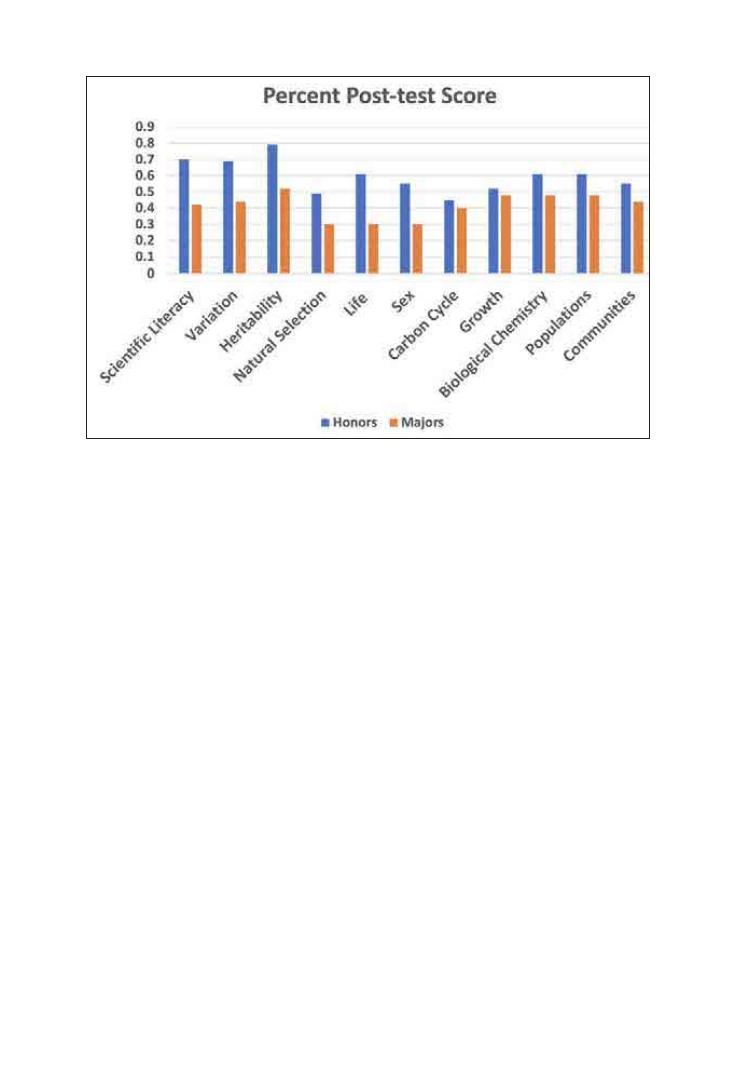
scores were frequently significant (Figure 1).
Data in the first four categories, relating to
evolution, were published previously with
further differentiation between majors and
non-majors and different combinations
of inquiry and traditional labs (Sundberg,
2003). These are pooled data from 3 years
of the honors section and the three highest-
scoring sections of the majors’ classes. Data
on the other concepts have not been reported
previously. The trends between the honors

PSB 70 (2) 2024
156
•
Armstrong, J. 2014. How the Earth Turned Green: A Brief 3.8 Billion Year History
of Plants. University of Chicago Press, Chicago.
•
Carroll, S. B. 2005. Endless Forms Most Beautiful: The New Science of Evo Devo.
Norton, New York.
•
Carroll, S. B. 2006. The Making of the Fittest: DNA and the Ultimate Forensic
Record of Evolution. Norton, New York.
•
Gould, S. J. 1977. Ever Since Darwin: Reflections in Natural History. W.W. Nor-
ton, New York.
•
Kolbert, E. 2014. The Sixth Extinction: An Unnatural History. Henry Holt and
Co., New York.
•
Mann, C. 2018. The Wizard and the Prophet: Two Remarkable Scientists and
their Dueling Visions to Shape Tomorrow’s World. Alfred Knopf, New York.
•
Miller, J., and B. Van Loon. 1982. Darwin for Beginners. Pantheon Books, New
York.
•
Montgomery, B. L. 2021. Lessons from Plants. Harvard University Press, Cam-
bridge, MA.
•
Odum, E. 1998. Ecological Vignettes: Ecological Approaches to Dealing with Hu-
man Predicaments. Harwood Academic Publishers, Amsterdam.
•
Pimm, S. L. 2001. The World According to Pimm: A Scientist Audits the Earth.
McGraw Hill.
•
Ridley, M. 1999. Genome: The Autobiography of a Species in 23 Chapters. Harp-
er Collins, New York.
•
Seethaler, S. 2009. Lies, Damned Lies, and Science: How to Sort through the Noise
around Global Warming, the Latest Health Claims, and other Scientific Contro-
versies. F.T Press Science, Upper Saddle River, New Jersey.
•
Thomas, L. 1974. The Lives of a Cell: Notes of a Biology Watcher. Viking Press,
New York.
•
Zimmer, C. 2018.
She Has Her Mother’s Laugh: The Powers, Perversions, and Po-
tential of Heredity.
Dutton, New York.
•
Zimmer, C. 2021. Life’s Edge: The Search for What it Means to Be Alive. Dutton,
New York
Box 1. Trade Books Used as a “Text” over 25 Years in Honors Biology (2–4 per year) at
LSU and ESU.
PSB 70 (2) 2024
157
Figure 1. Post-test scores in honors and biology majors courses using the same content assessment.
The first four categories are an abbreviation of previously reported data comparing a variety of
teaching approaches (Sundberg, 2003); the final seven categories are newly reported data. The
honors course described in the text and a traditionally taught majors’ course, with textbook and
accompanying laboratory, were the two highest-scoring approaches for all concept categories.
on the other concepts have not been reported
previously. The trends between the honors
course and majors’ courses were similar for
all of the concepts assessed. Post-test scores
in the honors course exceeded majors scores
for every concept tested. In some cases the
differences were not significant, but the
trend remained clear. For instance, one of
the concepts related to carbon cycle is that
plants both photosynthesize and respire. Yet,
most students have internalized that plants
are autotrophs and photosynthesize whereas
animals are heterotrophs and respire, as
usually taught in textbooks, and this remained
resistant to change regardless of pedagogy.
Perhaps surprisingly, while biology majors
in the honors course had the highest pre-test
scores, classmates majoring in economics or
English frequently showed the greatest gain
and earned the highest grades!
RECOMMENDATIONS
My first recommendation is to encourage
(require) your students to read some
relevant botanical/biological trade books
for general interest outside of class. This is
quite possible even in team-taught courses or
courses with multiple sections. For instance,
2 years ago, ESU dropped a decades-old
biology core curriculum that required a one-
semester introductory course followed by
one semester each of Botany, Microbiology,
and Zoology and replaced it with a two-

PSB 70 (2) 2024
158
semester introductory biology sequence: Cell/
Molecular followed by Organismal/Ecology/
Evolution. It was an easy sell in the organismal
course to encourage the team of instructors to
require students to critique two trade books
from the reading list for course curricula. A
selection of partial quotations from recent
student critiques was a convincing argument
(Appendix 3). Indeed, most of the new
instructors recommended several additional
favorite books from their discipline to add to
the reading list.
If you are the sole instructor in an introductory
course, I encourage you to consider selecting
appropriate trade books as an alternative
to a traditional textbook. There are other
precedents. It is not novel to find a college
professor who doesn’t use a textbook in
undergraduate courses and instead uses
primary literature (Goudsouzian and Hsu,
2023). This is considered to be especially
effective in developing students’ science
process skills. At the K-12 level, the National
Science Teachers Association has promoted
using trade books to teach science for years,
primarily to improve student attitudes toward
science (Royce, 2012). Improving content
understanding, science process skills, and
student attitude can be combined with the
trade book approach.
However, in departments with team-taught
introductory courses, it may be difficult
to convince colleagues to do something
as drastic as substituting trade books for a
textbook, especially in the majors course.
Like my former dean would say, it just doesn’t
“make sense” that this could work. Of course,
the results of data are not always what we
expect or what make sense. When we were
discussing our new courses, I did not even try
the trade book route. Instead, I argued that
how you use a textbook is more important
than the textbook you choose and that we
should simply go with one of the Online
Educational Resource (OER) Biology books
freely available to students. However, the vote
came down to either Campbell’s Biology or
Raven and Johnson’s Biology. My argument
was that the English, business, history, and
science majors who took Honors Biology did
not even use a textbook, and yet consistently
outperformed our students in majors biology
(Sundberg, 2003; Figure 1). Nevertheless,
the faculty committee firmly believed that a
comprehensive textbook (adequately covering
each of their specialties) was necessary for
students to learn the required material. It just
“doesn’t make sense” that you can do without a
textbook. This is a strongly engrained faculty
belief, especially when talking about majors’
courses. However, in my experience, faculty
are less concerned with such experimentation
in the non-majors’ courses, so that is where I
always started.
REFERENCES
Abbey, E. 1968. Desert Solitaire: A Season in the
Wilderness. McGraw-Hill, New York.
Alexopoulos, Constantine John. 1962.
Introductory Mycology, 2nd ed. John Wiley &
Sons, New York.
Anderson, E. 1952. Plants, Man, and Life. Little,
Brown and Company, Boston.
Commission on Undergraduate Education in the
Biological Sciences (CUEBS). 1967. Testing and
Evaluation in the Biological Sciences, Publication
No. 20. The George Washington University,
Washington, D.C.

PSB 70 (2) 2024
159
Commission on Undergraduate Education in the
Biological Sciences (CUEBS). 1969. Basic Library
List for the Biological Sciences. Publication
no. 22. The George Washington University,
Washington, D.C.
Commission on Undergraduate Education in the
Biological Sciences (CUEBS). J. G. Creager (Ed.),
1971. Guidelines and Suggested Titles for Library
Holdings in Undergraduate Biology, Publication
no. 32. American Institute of Biological Sciences,
Washington, D.C.
Cronquist, A. 1961. Introductory Botany. Harper
and Roe, New York.
Esau, K. 1960. Anatomy of Seed Plants. John Wiley
& Sons, New York.
Foster, A. S., and E. M. Gifford, Jr. 1959.
Comparative Morphology of Vascular Plants. W.
H. Freeman and Company, San Francisco.
Fuller, H. J., and O. Tippo. 1949. College Botany.
Henry Holt and Company, New York.
Goudsouzian, L. K., and J. L. Hsu. 2023. Reading
primary scientific literature: approaches for
teaching students in the undergraduate STEM
classroom. CBE Life Sciences Education 22(3).
6 June 2023.
Gould, S. Jay. 1977. Ever Since Darwin:
Reflections in Natural History. W.W. Norton,
New York.
Knobloch, I. W. 1968. Interest-Arousing Books
and Articles in Botany. Plant Science Bulletin
14:4-6.
Kreig, M. 1964. Green Medicine: The Search for
Plants that Heal. Rand McNally & Company,
Chicago.
Large, E. C. 1940.
The Advance of the Fungi.
Henry Holt, New York.
Raven, P. H., and G. B. Johnson. 1989. Biology,
2nd ed. Times Mirror/Mosby College Publishing.
St. Louis.
Royce, C. A. 2012. Teaching Science through
Trade Books. Richmond, VA. National Science
Teaching Association.
Sinnott, E. W. 1963. The Problem of Organic
Form. Yale University Press, New Haven.
Stebbins, G. L. 1966. Processes of Organic
Evolution. Prentice Hall, Englewood Cliffs, NJ.
Sundberg, M. D. 1994. Student Guide and
Resource Manual, Biology 1005. McGraw-Hill,
New York. (a non-majors’ investigative laboratory
to confront common misconceptions).
Sundberg, M. D. 2002. Assessing Student
Learning. Cell Biology Education 1: 11-15.
Sundberg, M. D. 2003. Strategies to help students
change naive alternative conceptions about
evolution and natural selection. Reports of the
National Center for Science Education 23: 23-26.
Sundberg, M. D., and M. L. Dini. 1993. Majors
vs Nonmajors: Is there a Difference? Journal of
College Science Teaching 22: 299-304.
Sundberg, M. D., and G. J. Moncada. 1994. Creating
Effective Investigative Biology Laboratories for
Undergraduates. BioScience 44: 698-704.
Sundberg, M. D., M. L. Dini, and E. Li. 1994.
Improving student comprehension and attitudes
in freshman biology by decreasing course content.
Journal of Research in Science Teaching 31: 679-
693.
Sundberg, M. D., J. Armstrong, M. Dini, and
B. Wischusen. 2000. Tips for Designing and
Implementing Investigative Laboratories. Journal
of College Science Teaching 29: 353-360.
Thomas, L. 1974. The Lives of a Cell: Notes of a
Biology Watcher. Viking Press, New York.
Van der Weel, F. R.(Rudd) and A. L. H. Van der
Meer. 2024. Handwriting but not Typewriting
Leads to Widespread Brain Connectivity: a High-
density EEG Study with Implications for the
Classroom. Frontiers in Psychology 14: 1219945.

PSB 70 (2) 2024
160
Appendix 1. Textbook Annotation
Taken from “The Polymath System”™ by James H. Wandersee, 1996.
Textbooks will be collected and annotations examined during each examination.
1. Use a mechanical pencil that lets you write CRISPLY and PRECISELY. Pencil
lasts longer than ink and is easily erased.
2. Annotation is NOT highlighting!. You are not just emphasizing important ideas
from the text. Instead, you are holding a running conversation with the author—
“talking back” to him as you read.
3. As you read, REACT to what you read by writing down your thoughts and
connections along the margin of the page.
4. Write down AT LEAST ONE legible annotation PER PAGE of assigned reading.
5. Print if your handwriting is not easily legible.
6. Connect your annotations to particular statements or sentences if appropriate.
7. Include emotions (+/-) in some or all of your annotations if you wish. Research
shows that learning tied to emotion is more readily recalled.
8. Annotation makes a book your own. It records what you were thinking when
you read the book, and it saves your good ideas for you.
9. Annotations should take the form of CONNECTIONS you see between the
book’s content and your own work, ideas you see in the text for innovations that
you want to make, links between what this author is saying and what other authors
you have read say, examples you thought of that illustrate the author’s point,
contrary positions you wish to take, names of people who would agree or disagree
with what the author said, historical connections—noting something entirely new
and intriguing to you, something that contradicts what the author just said, things
that make you angry or sad or happy, your own definition of what has just been
described in the text, connections to geography and places, connections to other
cultures and sciences, origins of ideas you see being expressed in the text, things
you see as ideal but not practical in your situation, ideas that remind you of a work
of art, things you can use to prepare for your own career, things you consider
humorous, ironic, or paradoxical, and so forth. Annotation makes your copy of
the book valuable because it captures your otherwise elusive thought and makes
finding key ideas easy for you later. It is an heirloom, a historical document, and an
archive of your cognition—should you become famous someday!

PSB 70 (2) 2024
161
Appendix 2. Writing Summaries and Critiques
For assignments in writing summaries and critiques, you are asked to read either a book
or a paper from the original scientific literature and then summarize or assess what you
read in fewer than two double-spaced, typewritten pages. Brief does not, in this case,
mean easy. In fact, producing that one- or two-page summary or critique will probably
require as much mental effort as that involved in preparing an essay or term paper of five
to ten pages in length. To do well in these short assignments, you must fully understand
what you have read, which usually means that you must annotate or take notes on your
book or read the paper many times, slowly and thoughtfully.
Follow the same procedures whether you are asked to write a summary or a critique;
indeed, a critique begins as a summary, to which you then add your own evaluation of
the paper.
When reading a book, look over the table of contents and read the preface to give you a feel
for what will be discussed and some perspective on the authors’ intentions. Then annotate
while you read following the same guidelines presented in the syllabus for annotating
your textbook.
For a paper, begin by reading the paper once or twice without taking notes. Fight
the temptation to underline, highlight, or otherwise create the illusion that you are
accomplishing something. It is often difficult to distinguish the significant from the not-
so-significant points during the first reading of a scientific paper; skim the paper once
for general orientation and overview. Don't try for detailed understanding in the first
reading, but do jot down any unfamiliar terms or the names of unfamiliar techniques
so that you can look these up in a textbook before you reread the paper. It often helps
to consult a textbook about the general biology of the organisms being studied before
returning to the paper.
During the next, more careful, reading of the paper, pay special attention of the Materials
and Methods and the Results sections. The essence of any scientific paper is contained
here. The results obtained in a study depend on the way the study was conducted. Were
samples taken only at one particular time of year? Was the study replicated? How
many individuals were examined? What techniques were used? In an experiment, what
variables (for example, photoperiod, temperature, salinity, or food supply) were held
constant? Were proper controls provided for each experiment? Which factors might affect
the outcome of the study?
As you begin to study the Results section, scrutinize every graph, table, and illustration,
developing your own interpretations of the data before rereading the author's verbal
presentation. We are readily influenced by the opinions of others, especially when those
opinions are well-written. Keep an open mind when reading the author's words, but try
to form your own opinions about the data first; you may see something that the author
did not.

PSB 70 (2) 2024
162
Appendix 2. Writing Summaries and Critiques, con't.
WRITING THE FIRST DRAFT
You will know that you are ready to write your first draft of the critique when you can
distill the essence of the paper into a single (or at most two) summary sentence. This
sentence should include all of the points, present an accurate summary of the study, and
be fully comprehensible to someone who has never read the original. As a general rule,
do not begin to write your review until you can write such an abbreviated summary;
this exercise will help you discriminate between the essential points of the paper and
the extra, complementary details.
1.
If you cannot write a satisfactory one- or two-sentence summary, reread the
article; you’ll get it eventually. Once your summary sentence is committed to
paper, ask yourself these questions:
2.
Why was the study undertaken or the book written? What purpose did the au
thor have in mind?
3.
What specific questions were addressed or important points made?
4.
How were these questions addressed? What approach did the author take to ad
dress each question?
5.
What were the major findings of the study or conclusions reached?
6.
What questions remain unanswered by the study? These may be questions ad
dressed by the study but not answered conclusively, or they may be new questions
arising from the findings of the study under consideration.
7.
For books that are a collection of essays, choose two or three that you found most
interesting and write on them. Don’t try to summarize the whole book.
WRITING THE SUMMARY
When you can answer these questions without referring to the paper you have read,
you can begin to write. Your introductory sentences must lead up to a statement of the
specific questions the authors set out to address. Next, tell (1) what approaches were
used to investigate each question and (2) what major results were obtained. Be sure to
state, as succinctly as possible, exactly what was learned from the study.
A critique is much like a summary, except that you get to add your own assessment of
the paper you have read. What were the good points; what were the bad points? Was
there something you thought the author did particularly well or were you hoping the
author would have included more of? Would you recommend this work to a friend?
Why or why not?
Pechenik, J. A. 1993. A Short Guide to Writing About Biology, 2
nd
ed. New York,
Harper Collins.

PSB 70 (2) 2024
163
Appendix 3. Some Selected Excerpts from Student Critiques of Trade “Textbooks”
Carroll, S. B.: Making of the Fittest
Overall, I believe the book is thought-provoking and insightful. Carroll writes in
a way that is easy to read, with the complicated aspects of DNA sequencing and
genome expressions explained in a clear and concise way. An aspect of his writing
that I liked was the use of humor. In a few places he made jokes such as adding
comedy to the story of the man who ate a poison newt and by treating one scientific
name as a tongue twister. Although the rest of the book’s tone is more serious and
argumentative, these brief moments of humor helped lighten the mood and made
the content feel more personal. I also enjoyed the use of multiple examples for ev-
ery topic he discussed.
Montgomery, B.: Lessons from Plants
While plants do not have eyes, ears, or a sense of touch, they are aware of their
environment just as much as we are with those senses. They distinguish kin, friend,
and foe, and they are able to respond to ecological competition despite lacking the
capacity of fight or flight. Plants are even capable of transformative behaviors that
allow them to maximize their chances of survival in a dynamic and sometimes un-
friendly environment.
The way Brenda writes this book, you can tell she is passionate about plants and
what she studies. She explains the behaviors and strategies of plants in a way that
is easy to understand, even if someone is not very knowledgeable about plants. She
transitions from personal experiences to how the plant deals with a certain problem
and survives, and what lessons to learn from them extremely smoothly. She uses
words that some people would associate with humans to explain the way plants
work, which makes it easier for the reader to connect the lessons. The book is very
organized and builds on what is already stated and refers to what she has talked
about already. She provides a different point of view of the world and of plants that
people, and especially me, never thought of before. I would recommend this book
to a friend because there are many lessons that can be learned, and it never fails to
keep your attention.
Zimmer, C.: She Has Her Mother’s Laugh: The Powers, Perversions, and Potential of
Heredity
The more questions that arise, the more we are able to discover about our own
genome and the unique ways it functions. The book demonstrated that over time,
numerous profound discoveries have occurred, but there are still many unanswered
questions.
This book was interesting because it showed the historical development of genetics
and modern evolutionary theory since the days of Mendel and also touched on the
topic of eugenics, which is a dark part of the history of genetics. My biggest com-
plaint with the book is that there was no clear concise timeline of events as chapters
jumped back and forth throughout history with little discretion. I would have en-
joyed the book more if it had been ordered more chronologically.

PSB 70 (2) 2024
164
Thomas, L.: The Lives of a Cell: Notes of a Biology Watcher
"The Lives of a Cell," the collection’s title essay, challenges the notion of the human
as an individual organism. Rather than belonging entirely to us, Thomas explains,
our bodies are produced by trillions of cells that work tirelessly and in harmony. In
addition, he suggests we may be able to perceive the planet as a single cell if we
apply this metaphor to a planetary scale.
Mann, C.: The Wizard and the Prophet: Two Remarkable Scientists and their Dueling
Visions to Shape Tomorrow’s World
Prophets, as Mann describes, are mostly concerned about the carrying capacity of
planet Earth and believe that human consumption should be limited to prevent di-
saster. Wizards, on the other hand, think that human ingenuity and science can be
used to reap more resources for humanity. Mann examines the challenges facing
humanity as the world population approaches 10 billion by 2050, and questions
how someone like Vogt or Borlaug would respond. These issues include producing
food, obtaining freshwater, providing energy, and addressing man-made climate
change. Throughout the book, Mann remains even-handed in his depiction of the
wizard and prophet ideologies. He makes no attempt to choose which idea about
how humans should interact with the world is correct.
My favorite thing about this book was the back and forth between the wizard and
the prophet. Looking at one idea and then looking at another view right after really
made me think. My least favorite thing about this book was the sadness it brought
me. No one wants to hear that planet Earth is struggling and the only one who can
save it is YOU. This is quite a daunting task.
This book is my favorite book out of the four. It was incredibly engaging read into
the lives of Vogt and Borlaug as they developed such massive societal forces as
the green revolution and modern environmentalism. Learning about the process of
artificial breeding for specific traits under Borlaug was incredibly fascinating and
the political activism of Vogt, while sometimes misled, is rather inspiring. I disliked
how the book constantly switched between the two men rather than focusing on one
over three or four chapters.
Appendix 3. Some Selected Excerpts from Student Critiques of Trade “Textbooks”, Con't.
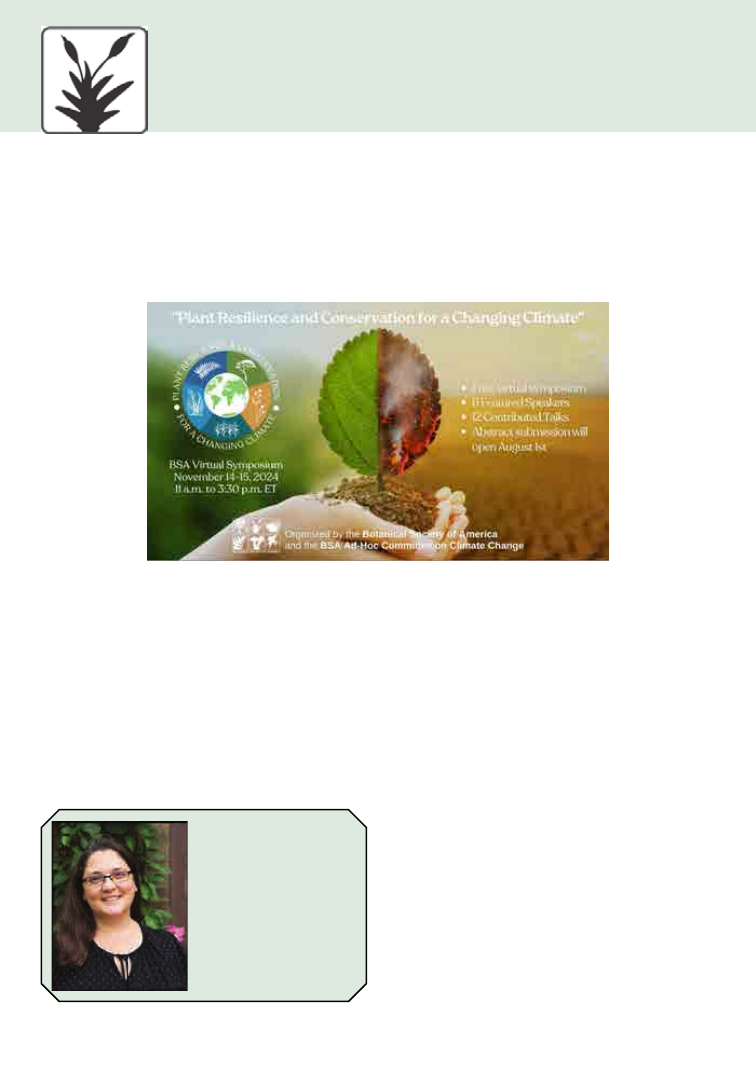
PSB 70 (2) 2024
165
165
By
Amelia Neely
BSA Membership &
Communications
Manager
E-mail: ANeely@</i>
botany.org
MEMBERSHIP NEWS
SAVE THE DATE! You are invited to the
BSA Virtual Symposium on Climate Change
November 14-15, 2024, from 11 a.m. to 3:30
p.m. ET. Each day of the symposium will
focus on its own theme, with a networking
session to foster discussion and build
new connections and collaborations.
This free global event is open to
the public and includes 6 featured
BSA Virtual Symposium on Climate Change:
Plant Resilience and Conservation for a
Changing Climate
speakers, as well as 12 contributed talks.
Featured speakers include:
• Dr. Sally Aitken, University of British
Columbia
• Dr. Jill Anderson, University of Geor-
gia
• Dr. David W. Inouye (Professor
Emeritus), University of Maryland
• Dr. Nicholas J. Kooyers, University of
Louisiana, Lafayette
• Dr. Holly R. Prendeville, U.S. De-
partment of Agriculture (USDA)
• Dr. Tanisha M. Williams, University
of Georgia

PSB 70 (2) 2024
166
To register, or find more information, visit:
https://climatesymposium.botany.org/plant-
resilience-and-conservation-for-a-changing-
climate.
BOTANY360 UPDATES
Botany360 is a series of programming
that connects our botanical community
during the 360 days outside of Botany
Conferences. The Botany360 event calendar
is a tool to highlight those events. The goal
of this program is to connect the plant
science community throughout the year
with professional development, discussion
sessions, and networking and social
opportunities. To see the calendar, visit www.
botany.org/calendar. If you want to coordinate
a Botany360 event, email aneely@botany.org.
Recent Botany360 event recordings:
• Now You’re a New PI, What’s
Next? (May 28, 2024)
https://www.youtube.com/watch?v=-
HjLVHv9JHA
• Longwood Gardens Fellows Pro-
gram Informational Webinar* (May
8, 2024)
https://www.youtube.com/
watch?v=fYNMHCV4v_Y
• Fulbright US Scholar Program: In-
sights from an Alumni Ambassador
(April 29, 2024)
https://www.youtube.com/
watch?v=D-dPEvKBlY8
• Getting Involved in Service to BSA
and Beyond (January 8, 2024)
https://www.youtube.com/
watch?v=kh-btx0L9c4
*Sponsored Event
BSA SPOTLIGHT SERIES
The BSA Spotlight Series highlights
early-
career and professional scientists
in the
BSA
community
and shares both scientific goals and
achievements, as well as personal interests of the
botanical scientists, so you can get to know your
BSA community better.
Here are the latest Spotlights:
• Lucy Adhiambo, Research Associate,
Center for Ecosystem Restoration –
Kenya
https://botany.org/home/careers-jobs/
careers-in-botany/bsa-spotlight-se-
ries/lucy-adhiambo.html
• Elton John de Lírio, Postdoctoral
Fellow, University of São Paulo
https://botany.org/home/careers-jobs/
careers-in-botany/bsa-spotlight-se-
ries/elton-john-de-lirio.html
• Funmilola Mabel OJO, Postdoctoral
Visitor, Royal Botanic Gardens, Kew,
Richmond Surrey,
TW9 3AE, London, United Kingdom
https://botany.org/home/careers-jobs/
careers-in-botany/bsa-spotlight-se-
ries/funmilola-mabel-ojo.html
Would you like to nominate yourself
or another BSA member to be in the
Spotlight Series? Fill out this form:
https://forms.gle/vivajCaCaqQrDL648.

PSB 70 (2) 2024
167
CAREERS IN BOTANY
PROFILES
The
2024-25 Careers in Botany Profiles
are now available at https://botany.org/
home/careers-jobs/careers-in-botany/
careers-in-botany-profiles-2024.html! These
professionals in the field of the botanical
sciences were part of the Careers in Botany
Luncheon at Botany 2024 on June 17, 2024.
Learn more about the variety of careers
that are represented by these nine talented
individuals from academia, industry,
government, and more! This link provides
these and past Careers in Botany Profiles.
BSA SPONSORSHIP
OPPORTUNITIES
Do you know a business or organization that
would benefit from being in front of over 3000
botanical scientists from over 70 countries,
and over 60,000 followers on social media? The
BSA Business Office has many opportunities
for sponsorship including:
• Sponsored Membership Matters news-
letter articles and footer ads
• BSA website banner ads
• Hosting Botany360 events
• Botany360 event logo advertisement
during event, a slide before/after event,
or time to discuss product at begin-
ning or end of event
• Sponsored social media ads
• Advertisement space in the Plant Science
Bulletin
Because we value our community, the above
opportunities are limited with the hope of
being informative without being intrusive.
Sponsorships will allow BSA to fulfill our
strategic plan goal of being financially
responsible during this time of economic
shifts.
To find out more about sponsorship
opportunities, email : bsa-manager@botany.
org.

PSB 70 (2) 2024
168
FROM THE
PSB
ARCHIVES
60 years ago
“Dr. Constantine J. Alexopoulos, President (1963) of the Society, suggested to the Council that
the category of Sustaining Member be created. Dr. Alexopoulos pointed out that the Mycological
Society has such a membership category, and it is an attractive one. The Council appointed Dr.
Lawrence Crockett, Business Manager, to make preliminary investigations of the idea as chairman
of a committee.
For $250 a company or organization will be given sustaining membership, a subscription to the
Journal, and a 10 per cent discount on advertising in the Journal. Initial investigations have resulted
in acceptance by three companies: Stechert-Hafner, Publishers; The Johnson Reprint Corporation;
and Triarch, George Conant, Ripon, Wisconsin.”
—Sustaining Membership. PSB 10(1): 7
50 years ago
Wm. Bridge Cooke responds to recent discussions in implementing certification for botanists.
“I assume that a certified horticulturalist is one who will have earned his credentials in an accredited
college totally through graduate programs or through apprenticeships with reputable firms. There
will probably be a variety of ways of attaining the prized certificate. The company composed of
certificated personnel or having such personnel on the payroll, will have a superior advantage over a
company without such personnel. Of course, the possession of a certificate will restrict the activity of
the holder to the province of the certificate. Have you ever met a situation in which your neighbors,
casual acquaintances, or even trades people, because you are known to be a botanist, thought that
you had the key to any and all problems of botany, horticulture, biology, local and national politics,
and even moon-exploration? This will hopefully get you “off the hook”, but you will not have time
to produce the documentation necessary to prove it before your interrogator’s face falls to the floor
incredulous of this communication gap. Also, what IBY questionnaire even hinted that a certificate
would be required? With the horticulturalists I can see some reason to have such a program of
certification since professionals who got that way “legitimately” through schooling and labor are in
a position to be pushed out by others who in their own way “legitimately” by labor and an innate
uncanny ability to handle plants have risen to relatively high positions in the profession.
I cannot see any reason for botanists to be concerned with such a certification program. Of course,
I have not been in any position to discuss the matter with anyone or hear anyone discuss it. I would
think that a prospective employer would want to see transcripts and recommendations and other
vitae in addition to any certificate which should only indicate adeptness in one or more administrative
manipulation which could or could not be regarded as demonstrating a technique for killing time!
I hope botanists have more productive matters to discuss than any proposed “certification
requirements” for being called a botanist!”
—Cooke, Wm. Bridge. 1974. Opinion/Commentary. PSB 20(2): 28
40 years ago
“The American Liberty elm the first true, totally American elm to be remarkably Dutch elm disease
resistant and to closely resemble its disease-prone relatives is soon to become available. The Elm
Research Institute is so confident of its new species’ disease resistance that it warranties all its trees
for ten years. The Institute has initiated its “Johnny Elmseed” program to find and computerize the
exact locations of all mature elms in the entire nation. In return for finding and reporting such a live
American elm, The Elm Research Institute will send one free American Liberty elm seedling to the
persons reporting its exact street location and owner identification."
—Disease Resistant American Elm 1984. PSB 30(3): 18.

PSB 70 (2) 2024
169
169
SCIENCE EDUCATION
By Dr. Catrina Adams,
Education Director
Jennifer Hartley,
Education Programs
Supervisor
Twenty-five high school teachers from 20
different states nationwide are preparing
to participate this fall with their students
in PlantingScience’s Power of Sunlight
photosynthesis and respiration Investigation
Theme. Online and in-person professional
learning workshops took place in June and July
and featured close collaboration with 17 early-
career scientists selected as “PlantingScience
Fellows.” The workshops are part of the BSA-
led PlantingScience Digging Deeper F2 grant
(NSF DRL#2010556), which is in its fourth
year.
Core components of the workshop included:
(1) teachers and scientists experiencing the
Power of Sunlight activities as students will,
HIGH SCHOOL TEACHERS AND EARLY-
CAREER SCIENTISTS PREPARE TO COUN-
TER STUDENT PRECONCEPTIONS ABOUT
PLANT SCIENTISTS AND PHOTOSYNTHESIS
AT PLANTINGSCIENCE F2 PROFESSIONAL
LEARNING WORKSHOPS
(2) analyzing video clips of teachers using
BSCS Science Learning’s evidence-based
STeLLA pedagogical strategies (bscs.org/
stella/), (3) discussing strategies teachers and
scientist mentors can use to address common
student preconceptions about photosynthesis
and cellular respiration and about who
scientists are and what they do, (4) analyzing
transcripts and other artifacts of past student-
scientist interactions from the website, and (5)
discussing how teachers, Master Plant Science
Team (MPST) Liaisons, and scientist mentors
work together to reach our goals for student
outcomes.
The workshops were led by a team from
BSCS Science Learning (Anne Westbrook,
Jenine Cotton-Proby) and by BSA Education
staff (Jennifer Hartley and Catrina Adams).
This year’s workshops were greatly enhanced
through co-facilitation by three scientist
leaders with prior experience serving in the
mentor and liaison roles. We so appreciate the
help of Cari Ritzenthaler, Phillipa Stone, and
Edi Wipf in this role. Three teacher leaders
also participated, drawn from teachers who
participated in last year’s workshops. Next

PSB 70 (2) 2024
170
year’s workshops will be primarily facilitated
by these teacher and scientist leaders as part
of our sustainability plan.
We would also like to recognize the 17 scientists
recruited from the BSA and partnering
scientific societies who participated in these
summer workshops and who will be working
closely with the participating teachers and their
students this fall: Gina Errico, Sanbon Gosa,
Betsy Justus Briju, Stephanie Kate, Micayla
Lamb, Joanna Lumbsden-Pinto, Stephen
Mills, Emma Parker Miller, Santiago Pérez
Ospina, David Riera, Bela Starinchak, Evan
Stark-Dykema, Stephen Stresow, Joshua
Toran III, Lakshmi Benkat Sai Ram Nagalla,
and Balasaheb Vitthal Sonawane.
WANT TO LEARN MORE?
PlantingScience was featured in a recent
Spotlight on Collaborative Teacher
Learning (https://cadrek12.org/spotlight/
collaborative-teacher-learning#adams) from
NSF’s CADRE (Community for Advancing
Discovery Research in Education). The article
provides a lot more information about the
PlantingScience Digging Deeper F2 research
project and how these collaborative teacher/
scientist workshops fit into the research plan
as well as some preliminary results.
PLANTINGSCIENCE
UPDATES
Spring 2024 Session Recap
After a hectic session of juggling our usual
PlantingScience participants with our F2
research participants last fall, we enjoyed
taking a breath with a smaller session this past
spring. The Spring 2024 session served over
560 students from 18 different schools. The
teams tackled various themes, with Wonder
of Seeds and Agronomy Feeds the World
comprising most of the projects. We also
had student teams studying celery tissues,
Brassica genetics, and C-Fern development.
Take a moment when you can to enjoy our
This summer, the BSA’s Education booth at
the Botany conference featured a lollipop pull
game and fun botanically themed prizes for
PlantingScience mentors and those suggest-
ing resources for our State-by-State Resources
website update. Jeremie Morel (right) shows
off the soybean toy he won after signing up
to mentor, while 2023 PlantingScience Fellow
Josh Felton points to the “Ask me about Plant-
ingScience” ribbon he was using to recruit new
mentors to join the program.
PSB 70 (2) 2024
171
Star Projects from this session: https://
plantingscience.org/about/sampleprojects
As always, we extend our sincere thanks to
the BSA members who assisted these student
teams as mentors and liaisons—your support
is what makes our program so special and
successful! If you have never mentored
for us, please check out our website at
Plantingscience.org and consider signing up.
You’ll be making a difference in the lives of
students all over the U.S. and helping to grow
the next generation of plant scientists!
BSA MASTER PLANT
SCIENCE TEAM
RECRUITMENT
IS UNDERWAY!
As we look ahead to the coming academic
year, we seek early career scientists interested
in supporting PlantingScience as liaisons!
Members of the Master Plant Science Team
support PlantingScience by helping teachers
line up mentors for their students and then
moderating the team conversations as they
unfold. This is a great way to contribute to
the PlantingScience program, and selected
applicants will receive a free BSA membership,
discounts on Botany 2025 registration, and
other perks! For more information, visit:
https://plantingscience.org/getinvolved/
joinmpst
BSA EDUCATION
COMMITTEE UPDATING
CURRENT RESOURCES
BY U.S. STATE/TERRITORY
The Education Committee would like to share
links to up-to-date floras and field guides,
academic programs (where in your state can
people pursue a botany-related degree?), as
well as organizations and quality, durable web
resources focused on the botany of the state
or region.
The first goal is to create the most
comprehensive undergraduate student-
appropriate state flora/field guides listed
for each state. This will be useful resource
for faculty who want to refer students to their
local flora, or for botanists moving from one
region to another. We would like to finalize
this resource to promote at the Botany 2025
meeting in Tucson, AZ next summer.
After a push for attendees to submit their local
resources during the Botany conference this
summer, we now have 34 resources submitted
representing 21 U.S. states. Thanks so much to
everyone who has contributed to creating this
useful resource!
We are still seeking more resources to
complete the update, so please take a moment
to share resources from your state or region.
It should take less than 5 minutes to submit
your resource(s), which will be vetted by the
Education Committee and then added to the
botany.org website. To submit a resource,
please use this link: https://forms.gle/
VjpHPYM9pVKJ4dmh9
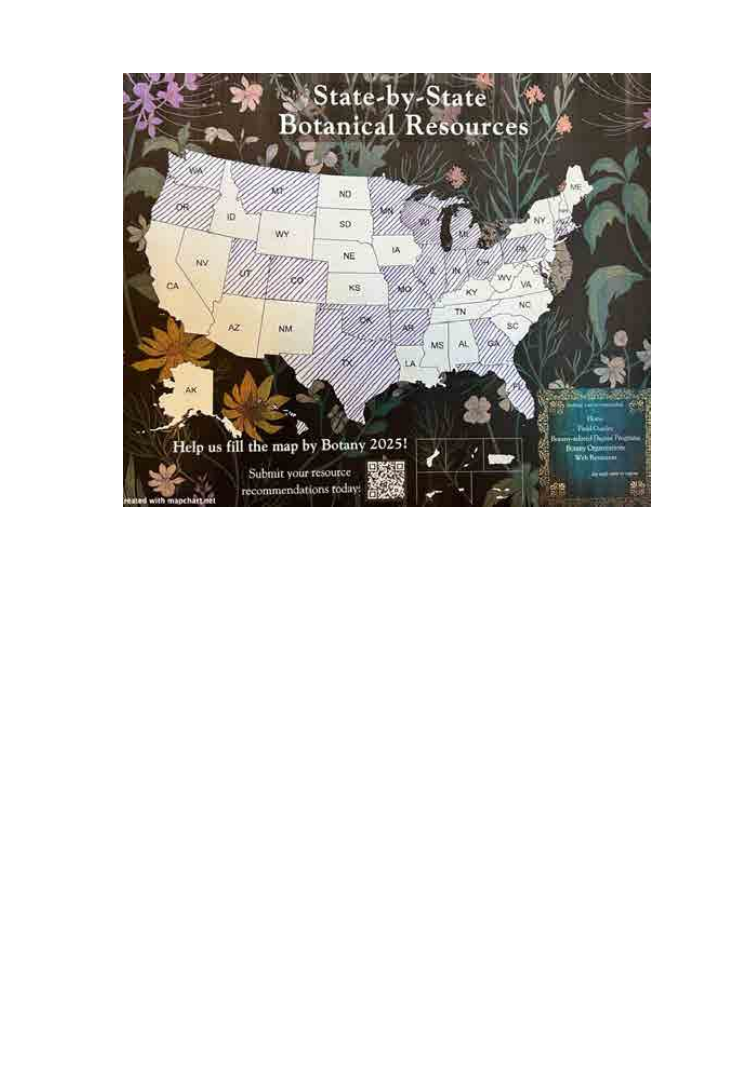
PSB 70 (2) 2024
172
Suggested books are categorized into the
following topics: Biomedicine, Botany/
Plant Biology, Ecology and Natural History,
Economic Botany, Evolution, Forensic
Botany, History of Biology/Biography,
Mycology (Fungi), Microbiology/Molecular
Biology, Philosophy of Science/ General
Science, Phycology (algae), Women in
Science, Zoological.
If you are teaching or planning to teach courses
involving these topics (or if you are just
looking for a new book for your nightstand),
please check out his curated list—and check
out Marsh’s article in this issue of the Plant
Science Bulletin!
Help us fill the map! Submit a resource for your state. We are marking each state as resources are
submitted. We’re almost halfway to getting all states represented.
NEW TEACHING
RESOURCE: ANNOTATED
LIST OF POPULAR
BIOLOGY BOOKS
Marsh Sundberg has compiled an extensive
list of popular biology (mostly botany)
books with an eye to their use in teaching
contexts and would like to share these with
the BSA community. The list (which Marsh
will occasionally update) is available as a
Google Doc here: https://docs.google.com/
document/d/1USkGueM93AmqnsFpTNzaE
WDGcrlgXZvL3mtQfJXDrXY/edit
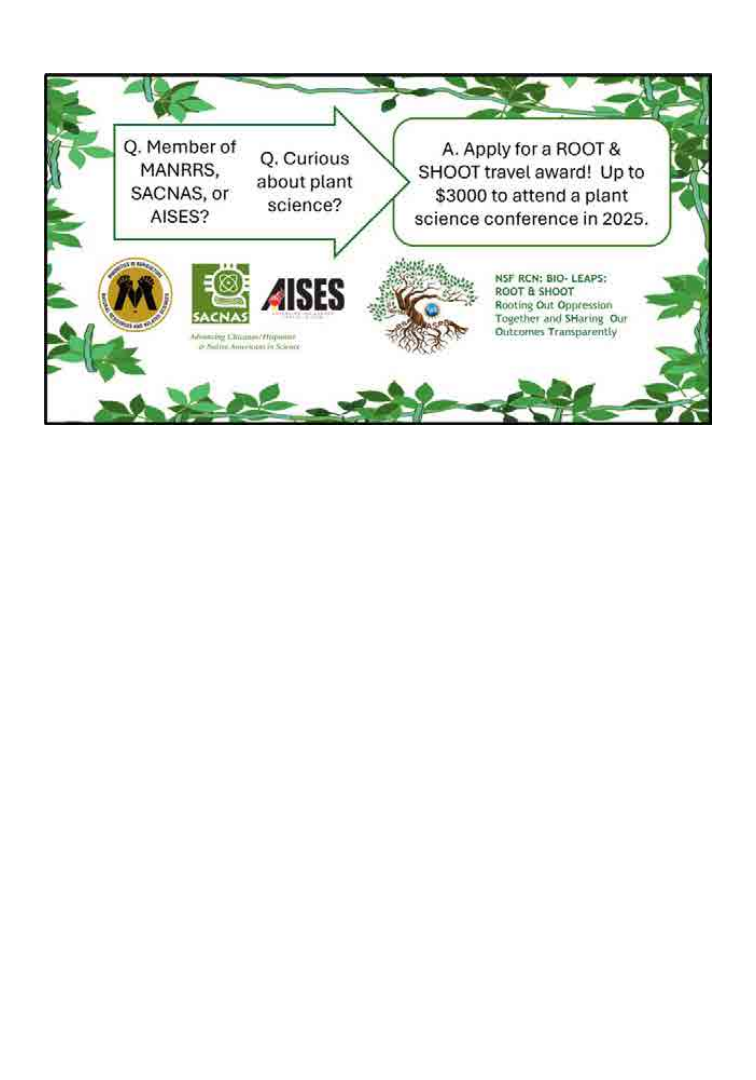
PSB 70 (2) 2024
173
ROOT AND SHOOT RCN
TRAVEL AWARDS TO
BOTANY AND OTHER PLANT
SCIENCE CONFERENCES
FOR STUDENT/MENTOR
PAIRS WITH SACNAS, AISES,
OR MANRRS AFFILIATIONS
Travel awards for the Botany 2025 conference
are available for student/mentor pairs through
the ROOT & SHOOT RCN. The group
will launch recruitment for these awards in
September, and applications are due December
2, 2024. Check out the rootandshoot.org
website and join the mailing list to be notified
of upcoming awards and other opportunities
to participate.
A panel discussion will be held to kick off the
recruitment for this award, featuring some of
the 2024 travel awardees who will talk about
their experiences and answer questions about
the program. More details are available on this
page: https://rootandshoot.org/plan-ahead-
for-2025-root-shoot-travel-awards/.
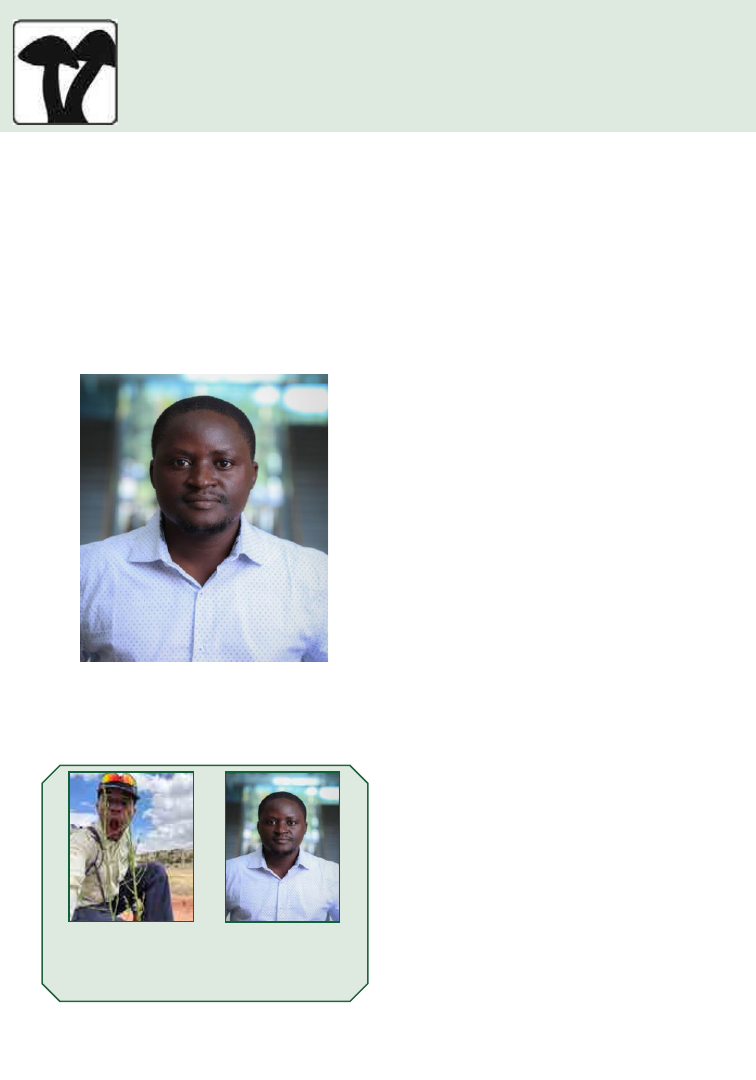
PSB 70 (2) 2024
174
174
STUDENT SECTION
By Josh Felton and
Benjamin Aderemi Ajayi
BSA Student Representatives
We are excited to welcome our incoming
BSA Student Rep, Benjamin Ajayi! Ben’s term
began the day after the Botany Conference
and will last for two years from 2024 to 2026.
Get to know them in the interview below.
BENJAMIN ADEREMI AJAYI
Ph.D. Student at Florida State University
Getting to Know Your New
Student Representative
When did you join BSA and what motivated
you to do so? Will you encourage other
students to become members and participate
in the society as well?
In 2020, I joined the BSA because I was de-
termined to expand my research network and
improve my skills as a botanical researcher.
My membership in BSA has given me access
to information and opportunities that have
helped me grow academically. I can’t wait to
take advantage of these advantages in order
to advance my career and significantly ad-
vance the field of botanical study. In addition,
I am excited to see more people join BSA
and become involved so that we can all work
together to create a lively and cooperative
community inside the Society.
What motivated you to run for the position
of Student Representative to the Board of
Directors and what do you plan to do as the
student representative of BSA?
I joined the BSA back in 2020, which
became a nurturing ground for my passion
in plant biodiversity. As time passed, my
professional journey and BSA’s mission have
aligned perfectly. The Society has been more
than just a professional association—it has
provided a strong network, fostered research
collaborations, and facilitated career growth.
Now, at this thrilling point in time, I see a path
forward where the BSA can expand its impact,
particularly in enriching the experiences of
the more student community. As a student

PSB 70 (2) 2024
175
representative elect, I am committed to
ongoing efforts to enhance diversity, equity,
and inclusivity in our Society. It would be a
privilege to represent and work alongside my
present and future colleagues in the BSA.
What have you gained from being a
student member of BSA and why would
you encourage other students to become
members and participate in the society?
During my attendance at a Botany Cconference
held in Alaska in 2022, I discovered captivating
new research findings in the fields of ecology
and evolution. Additionally, I formed valuable
professional connections, one of which
ultimately led me to find a PhD advisor. The
experiences gained during the conference
had greatly impacted my ongoing doctoral
research at Florida State University.
What’s your research about and how did you
discover your research interest?
I am interested in exploring the quantitative
genetic variation in Florida endemic
Panhandle lily (Lilium iridollae) for Enhanced
Management and Conservation Strategies.
What sorts of hobbies do you have?
Reading and traveling.
BOTANY 2024 REVIEW
It was so great seeing so many of your faces
again in person at Botany 2024 in Grand
Rapids! Students made up 47% of the total
conference attendees with 409 total students!
The student reps worked to encourage
more interactions between students and the
botanical community at a variety of events.
Our first event of the week was the Data
Analysis and Visualization in R on Sunday,
where students got the chance to learn the
basics of R while also analyzing their own
datasets. The next day, we held the widely
popular Careers in Botany Luncheon where we
had 10 panelists for students to connect with.
We then helped host a very well-attended
Student Social at the B.O.B.’s House of Music
and E where we chatted late into the night.
For those of you who have not filled out the
Conference Survey, please visit https://www.
surveymonkey.com/r/Botany2024 to help us
make the conference a better experience for
you in the future.
Reach us by email or X: Josh (feltonjosh@</a>
icloud.com; @JoshFelton12) or Ben (baa23a@</a>
fsu.edu; @ajayibenmi).
Careers in Botany Luncheon
At the Careers in Botany Luncheon, we had
nine panelists who represented the spectrum
of career stages and jobs, with panelists
working in academia, government, non-
governmental organizations, herbaria, and
botanical stations. A total of 88 students
attended! Read more about the panelists at
the Careers in Botany Profiles: https://botany.
org/home/careers-jobs/careers-in-botany/
careers-in-botany-profiles-2024.html.
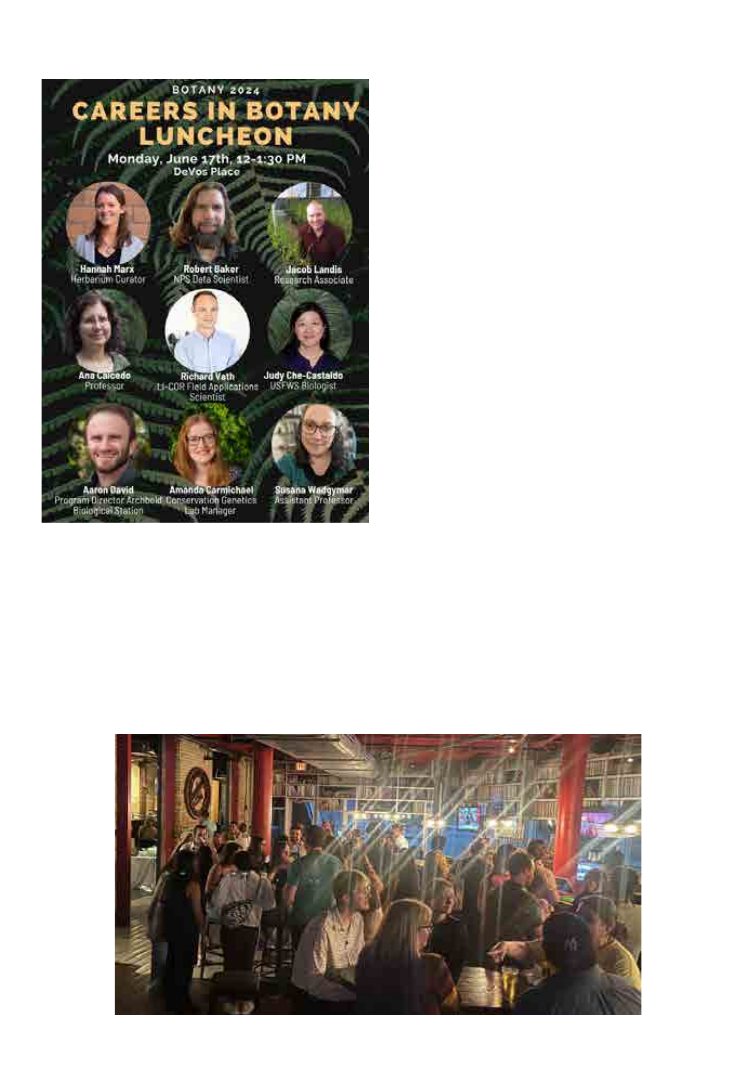
PSB 70 (2) 2024
176
Student Social
Thank you to everyone who attended the
Student Social! We had a great time getting
to know each other at the B.O.B. Building in
Grand Rapids. We look forward to seeing all
of you again, or getting to know you for the
first time, at Botany 2025 in Tucson, Arizona!
Data Analysis and
Visualization in R
Our first CV writing/website building
workshop was a great success with 4
panelists and 20 attendees. This workshop
introduced basic concepts, syntax, and usage
in R programming, statistical analysis, and
visualization techniques for botanical data. In
the first half of this workshop, we provided an
overview of R and its basic usage. We covered
basic information about R syntax and the
RStudio interface, and we moved through
how to import CSV files, the structure of data
frames, how to manipulate data frames, how
to calculate summary statistics from a data
frame, and a brief introduction to plotting. In
the second half of this workshop, we discussed
and performed statistical analyses and
visualizations best suited to student datasets.
We also discussed different data visualizations
to illustrate both good and bad applications
of design and visualization principles. By
the end of the course, students had the
essential skills of processing, manipulating,
and analyzing data of various types, creating
advanced visualizations, generating reports,
and documenting codes.
PSB 70 (2) 2024
177
BEYOND THE
CONFERENCE
This year, we continue to work with the BSA
Early Career Professional Development
Committee to support students and early
career professionals. This group is working
hard to help students and junior botanists
meet other professionals, find mentors, and
take advantage of various opportunities. Their
GRFP workshop and mentorship opportunity
is aimed at helping students apply for the
NSF award this year. Their Fulbright Webinar
discussed the process of applying for Fulbright
grants, particularly for those beyond the
student level. The committee also hosted a
new PI webinar aimed at new PIs, who just
accepted offers, negotiated terms, and are
now trying to start a lab and get things going;
this webinar aims to discuss the logistics,
challenges, and surprises of setting up a new
research group and how to navigate through
one’s first year as a new PI.
They are also putting together another GRFP
workshop this fall. Keep your eyes out for more
updates from BSA’s social media accounts and
newsletters.
Learn more about the committee at: https://
cms.botany.org/home/governance/early-
career-committee.html.

PSB 70 (2) 2024
178
178
ANNOUNCEMENTS
IN MEMORIAM
DONALD A. LEVIN
(1939 – 2022)
An Ecogeographic Perspective
Don, a lifelong Cubs fan, was born and raised
in Chicago. He was the preeminent plant
evolutionary biologist from the mid-1960s
to the early 1990s with 170 publications from
1963 to 1990. In the days when one browsed
journals in the stacks, Don seemed to have
a paper in every issue of Evolution and the
American Naturalist: from 1966 to 1975 he
published 34 papers in these two journals.
In addition to 230+ journal articles, Don
wrote two books:
The Origin, Expansion, and
Demise of Plant Species (2000) and The Role
of Chromosomal Change in Plant Evolution
(2002). His publications have garnered over
25,000 citations (h-index=74; https://scholar.
google.com/citations?user=1jE4flwAAAAJ
&hl=en&oi=ao).
Don received his PhD from the University
of Illinois with Dale Smith, a Charles Heiser
student. Following his PhD, he took his first
job at the Chicago campus of the University of
Illinois (UIC). After 5 years he moved to Yale,
and two undergrads from UIC, Morris Levy
and Barbara Schaal, became his first graduate
students there. After three years at Yale, he
moved in 1972 to the University of Texas in
Austin.
Don’s work has brought about sweeping
changes in the analysis and understanding
of plant population biology. Trained as a
biosystematist, Don’s earliest work lay mostly
in investigating the frequency and limits
to interspecific hybridization in the genus
Phlox, with studies on reproductive isolation
between species. Gene flow in plants was to
become his primary interest: in particular, the
movement of alleles via pollen transfer.
While at UIC, Don had the good fortune to
hook up with Harold Kerster, a herpetologist
who was familiar with the population genetic
methods of Sewall Wright. In a series of
publications, they forged a new direction
for plant studies with investigations on
evolutionary aspects of gene movement both
between and within species. These set the
stage for a major shift from studies focused on
pollination ecology and pollinator syndromes
to an evolutionary approach via plant
population genetics.
Their first study on intraspecific allele
movements, Local gene dispersal in Phlox,
estimated both seed and pollen dispersal and
estimated neighborhood sizes in the perennial
Phlox pilosa. They followed this with empirical
studies in other species, examined effects of
density and plant height on pollen flow, and
estimated theoretical neighborhoods and
effective population sizes under different plant
breeding systems. They topped this all off with
their monumental 80-page review, Gene flow
in seed plants, now with over 1300 citations.
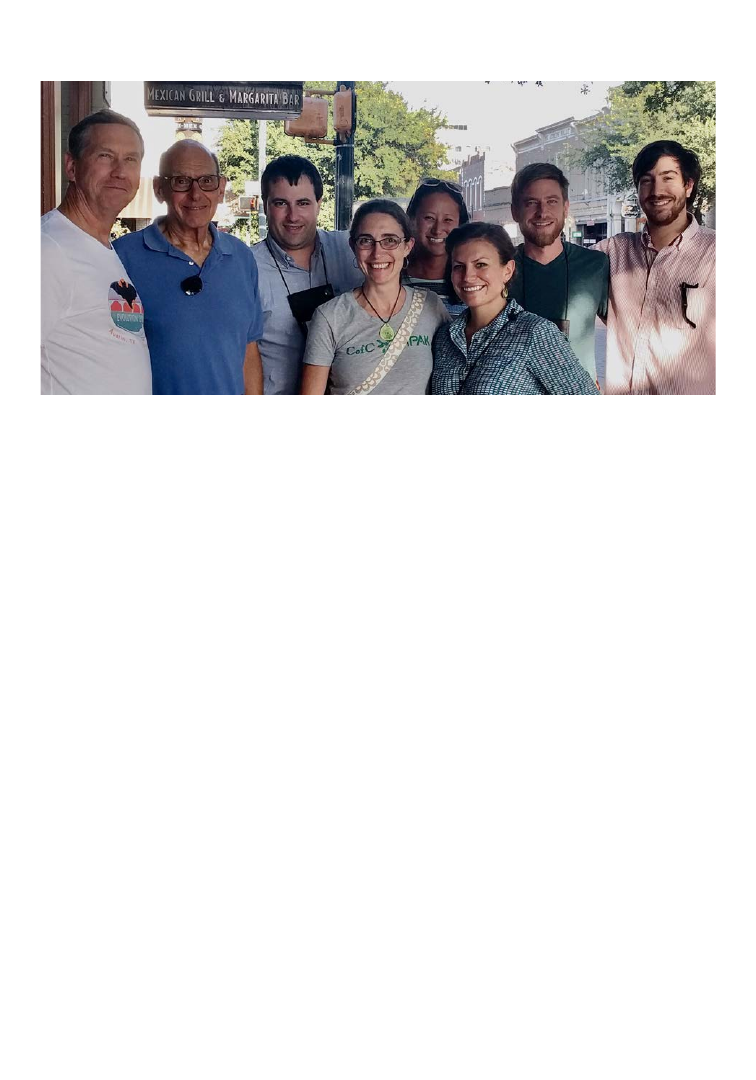
PSB 70 (2) 2024
179
Don maintained his interest in the effects
of gene flow on the evolution of plant
populations with many studies on the genus
Phlox but began to branch out with conceptual
investigations and reviews. His curiosity
about plant defenses against herbivores
led to a series of reviews of plant phenolics,
trichomes, and alkaloids. He was interested in
the consequences and impacts of polyploidy,
including how polyploidy could induce novel
phenotypes (1983), and a series of 11 papers
between 2006 and 2021 on the importance of
polyploidy for plant diversity.
His interest in gene flow and the potentials
for hybridization/reproductive isolation led
him to further general investigations on the
nature of plant species and plant speciation.
Again, not only did he perform empirical
investigations, but also produced extensive
reviews and keen syntheses. For example,
Phlox drummondii occurs in both pink and
red flower color morphs; the red-flowered
variety occurs only in the eastern portion of
its range, notably in areas where it is sympatric
with the pink-flowered species P. cuspidata.
Setting out an array of pink- and red-
flowered drummondii plants in a P. cuspidata
population, he determined that red-flowered
plants had significantly lower levels of
interspecific pollen exchange, suggesting that
the evolution of the red-flowered morph was
an example of character displacement (1985).
Robin Hopkins followed up on this work,
finding molecular signatures of selection on
Three generations of the Levin academic lineage at the 2018 Evolution meeting in Austin, TX.
(Left to right): Carl Schlichting
1
(F
1
), Don Levin (P), James Mickley
2
(F
2
), Courtney Murren
3
(F
2
),
Nora Mitchell
4
, Stacy Krueger-Hadfield
5
, Tim Moore
6
(F
2
), and Ben Flanagan.
7
Current affiliations: 1-Prof Emeritus, UConn; 2-Herbarium Director, Oregon State University;
3-Professor, College of Charleston; 4-Assistant Professor, Univ. of Wisconsin – Eau Claire; 5-Asso-
ciate Professor, Virginia Institute of Marine Science; 6-Director of Statistical Consulting, UConn;
7-PostDoctoral researcher, D. Bolnick Lab, UConn.

PSB 70 (2) 2024
180
an allele that intensifies pigmentation in the
red-flowered morph (2011, 2012).
Don’s was an insatiable quest for new insights.
Back when it was actually possible, Don read
all the literature and was very quick to identify
and deploy useful new techniques, often from
the zoological literature. In his early career he
employed analysis of hybridization in plants
via paper chromatography and was a very
early plant adopter of allozyme techniques
(1970). But it was not only techniques that
he was interested in—he kept an eye on new
conceptual ideas and applied them to plants,
e.g., he wrote two papers on developmental
instability in plants in 1970. He used a
dominant allele as a means of distinguishing
effective gene flow from pollen dispersal in
progeny of Phlox, and he made use of the
broad range of cultivars of Phlox to understand
patterns of evolution in annual species. His
interest in pollen movement led him to be
among the early investigators of the fate of
microgametophytes (1975).
Perhaps the best example of his eye for
innovation was his 1975 paper, Pest pressure
and recombination systems in plants. At the
time, there was widespread interest in the
paradox of sex: what features of sex could
provide the necessary advantage to individuals
required to overcome its disadvantages?
Don proposed that selection pressure to
avoid parasites, e.g., herbivorous insects,
would provide significant advantages to the
production of novel recombinant phenotypes,
e.g., new phytochemical profiles. In essence,
this was an application of the Red Queen
hypothesis, offered by van Valen in 1973 to
explain patterns of extinction in the fossil
record. Levin’s formulation was proposed
several years in advance of similar ideas by
John Jaenike, WD Hamilton, and Graham
Bell.
Don collaborated widely on ‘idea’ papers, most
notably with an array of animal population
geneticists (Wyatt Anderson: competition
for pollinators; Alan Templeton: seed pools;
Phil Hedrick: population bottlenecks; Alan
Wilson: evolutionary rates), but also with
plant population biologist Janis Antonovics
(density-dependence) and epidemiologist
Lauren Meyers.
Don had a dozen or so PhD students whose
research spanned many topics; almost all
went on to successful academic careers.
His innovative studies in natural plant
populations and extensive reviews provided
the groundwork for the careers of many
graduate students.
—Carl D. Schlichting, Professor Emeritus, De-
partment of Ecology and Evolutionary Biology,
University of Connecticut
PSB 70 (2) 2024
181
181
BOOK REVIEWS
Brave the Wild River: The Untold Story of Two Women Who Mapped the Botany
of the Grand Canyon
Date Palm
Enchanted Forests: The Poetic Construction of a World Before Time
From Despair to Discovery: The Botanical Odyssey of Matthias Jakob Schleiden
and the Dawn of Cell Theory
The Lichen Museum
The Lives of Seaweeds: A Natural History of our Planet’s Seaweeds & other Algae
Brave the Wild River: The
Untold Story of Two Wom-
en Who Mapped the Bota-
ny of the Grand Canyon
Melissa L. Sevigny
2023. ISBN 978-0-393-86823-4
US$30.00 (cloth); 290 pp.
Norton, New York
The Hoover Dam was
completed in 1936, and by 1938 Lake Mead
was beginning to drown the former riverbank
of the Colorado River. Elzada Clover, a
42-year-old recent PhD (1935) and instructor
in botany at the University of Michigan,
received a $300 grant to document the plant
life along the Colorado River. No one had
ever collected along the famous route of
John Wesley Powell, and only a few men had
matched Powell’s feat of floating through the
Canyon. Clover was undeterred and focused
on finding new species before they were lost
forever.
Clover’s dissertation was on cacti of the Rio
Grande Valley, and her goal was to study all
the cacti of the southwest. On a collecting trip
to southern Utah in 1937, Clover met Norman
Nevills, a lodge owner and river guide who led
river trips down the San Juan and Colorado
Rivers as far as Lee’s Ferry. Clover wanted a
guide for a mule trip into the Grand Canyon
to collect cacti; Nevills wanted to run the river
through the Grand Canyon, document the
experience, and drum up publicity. “In a few
minutes they laid out the entire harebrained
scheme.”
Clover recruited two grad students to the team.
Eugene Atkinson, skilled in taxidermy and
studying paleobotany, could collect specimens
of birds and mammals to sell to help subsidize
the trip. Lois Jotter, with a master’s in botany
and working on a PhD in cytogenetics of
Oenothera, was a friend and former roommate
with back-country experience. Nevills built
three flat-bottom boats and recruited LaPhene
Harris, a USGS river gauger, and Phil Gibson,
an amateur photographer from San Francisco.
The six met on June 12 at Green River—along
with a reporter from Salt Lake City. The AP
was already producing national reports about
the trip, which was “a mighty poor place for
women,” even if they were archeologists.
The public caught the novelty of women
going down the river, but the press never did
recognize that they were botanists and they
were going on a scientific expedition to collect
plants. Clover made her first collection of
the trip that day, personal collection number
1912, a specimen of Opuntia polyantha var.
hystricina.

PSB 70 (2) 2024
182
On June 20 they started down river. Both
Clover and Jotter kept journals and wrote
letters focusing on the plants they found, the
river they experienced, and personal dynamics
within the group. Even before reaching the
Colorado River four days later, they noted
the spread of invasive Tamarisk along the
riverbank. The group had already established
a routine. The women cooked and collected,
the men steered the boats and rowed.
Early the next day the brownish Green River
joined the raging, red Colorado River at
flood stage, only 4 miles ahead of their first
rapids in Cataract Canyon. The adventure
had truly begun, yet that first evening Clover
recorded collection number 2104, Forestiera
Neomexicana—nearly 200 collections in
the first 5 days. They experienced rising
river, loose boats, raging rapids, capsizing,
thunderstorms, and landslides while
collecting plants. The days became a blur and
personalities began to clash. On July 4, they
reached the confluence of the San Juan River
and decided to take a detour to visit Rainbow
Arch. However, according to their schedule,
they were due to be at Lees Ferry and the
Press (and resupply) was waiting anxiously.
For three days TWA rerouted flights from Los
Angeles to allow pilots to search Glen Canyon.
On July 7, a U.S. Coast Guard plane spotted
them and dropped a message asking them to
signal if they were the “party of geologists from
the University of Michigan who are overdue at
Lees Ferry.” The next day they landed at Lees
Ferry and journalists had a field day of (mis)
information. Clover arranged for more than
100 cataloged specimens to be shipped back
to Michigan, and two of the men left and were
replaced.
Finally, resupplied and rested, the expedition
resumed on the 13th with the river still at
flood stage but dropping fast. Five days later
they were at the base of Bright Angel Trail
and again the press was ready. There was no
mention of botany; Jotter notes in her journal
that the press has always been interested in
her as a woman with no mention of botany.
Clover arranged to have additional collections
brought up from the river and sent to
Michigan from Park Headquarters, but they
were left at the river. (In October, another
river guide who had met the group at Lees
Ferry found the presses at the base of Bright
Angel Trail and sent them back to Michigan.)
From this point on, Clover continued her
journal writing but Joiner stopped. At the end
of the Grand Canyon and coming into the
filling Lake Mead, Clover comments on barrel
cacti drowning as the reservoir rises.
Forty-three days (36 on the water) after
beginning their expedition, Clover and Joiner
reach the end and returned to Michigan.
More than 400 species are in their published
collection list in the American Midland
Naturalist, including two type specimens,
Echinocereus canyonensis and Sclerocactus
parviflorus, deposited in the U.S. National
Herbarium. They also co-published on Grand
Canyon Cacti in the Bulletin of the Torrey
Botanical Club. Clover retired from Michigan
as Professor Emeritus of Botany in 1967.
The importance of this work is significant.
Sevigny explains “There was simply no other
comprehensive plant list published prior to the
closure of Glen Canyon Dam…. Anyone who
wanted to understand how the vegetation had
changed…had to refer to Clover and Joiner’s
work.” (p. 343).
Joiner married mycologist Victor Cutter, Jr. in
1942, and upon completing her degree joined
the faculty of the Woman’s College of the
University of North Carolina. In 1994, at the

PSB 70 (2) 2024
183
age of 80, she was invited to join a 12-day raft
trip to reassess the effect of the Glen Canyon
Dam on the river. She accepted the invitation
because it was about science, according to the
author, not because she was a woman who
ran the daunting Colorado River through the
Grand Canyon.
The author does an excellent job of constructing
an engaging account of the expedition from the
botanists’ journals and letters, while putting it
into both historical and ecological perspective.
Sevigny’s story adds the names of Clover and
Joiner to a long list of women, many botanists,
who have provided information vital to the
conservation movement (Riley, 1999). It
should be in every school library and on every
teaching botanist’s reading list. It would be a
great gift for budding botanists.
REFERENCES
Riley, G. 1999. Women and Nature: Saving the
Wild West. University of Nebraska Press, Lin-
coln, NE.
—Marshall D. Sundberg, Kansas University
Affiliate and Roe R. Cross Distinguished Pro-
fessor - Emeritus, Emporia State University;
and Sara B. Sundberg, Professor of History -
Emeritus, University of Central Missouri
Date Palm
By Al-Khayri, Jameel M., S. Mohan
Jain, Dennis V. Johnson, and
Robert R. Krueger (eds)
2023. ISBN 13-9781800620186
US$100.00 (paper); 638 pp.
CABI, Boston
This book, part of the Crop
Production Science in Horticulture series,
consists of 18 chapters divided between basic
botany, diversity, and genetic improvement—
all aspects of production from plantation
establishment through post-harvest
processing, and future opportunities. Each
chapter is a stand-alone essay that leads to
some repetition, particularly of the history
of date palm cultivation, but this does help
put every focused chapter into the general
perspective of date cultivation.
General botanical interests are covered in the
first five chapters. The first chapter provides
the history of date palm cultivation—arguably
the first cultivated fruit crop, domesticated in
the Middle East (Mesopotamia) approximately
5000 years ago, although exploited prior to
domestication for perhaps 2000 years before
that. Archaeobotanical evidence supports
production expansion to Egypt by 3500
BP and to West Africa and India by 2000
BP. Many current cultural practices were
developed in antiquity and documented in art,
writing (code of Hammurabi), and cultural
artifacts. The date palm is referred to in the
sacred texts of all three Abrahamic religions
and may have been “the tree of life” (Tree of
Knowledge of Good and Evil in the Garden
of Eden). Its ancestry is unclear and many
traditional varieties still exist. Date is the
keystone species of desert oases. Today date
palm production is primarily in developing
countries where dates remain a primary food
crop. Traditional oasis production dominates
North African countries, and plantation
production dominates in Arabia and Pakistan.

PSB 70 (2) 2024
184
Botany and physiology are the focus of
Chapter Two. Some interesting features are
highlighted. Although typically a single-
stemmed palm, many western varieties have
branched individuals. While notably tolerant
to heat (and even requiring it), the roots
require accessible water and include short,
thick ‘root tubers’, containing mycorrhizae, as
well as aerating pneumatophores. Stems are
protected and strengthened by ensheathing
leaf bases. The sclerified leaves are persistent
and contain phytoliths. Surprisingly, stomata
were not mentioned in the leaf anatomy
section; only in the chapter on plantation
establishment and management are the
occurrence of sunken stomata mentioned.
The plants are dioecious with inter-foliar
branched inflorescences. Pollen affects not
only embryo and endosperm development,
but also development of seed and fruit
(metaxenia).
With more than 5000 cultivars worldwide, it
would seem that there is adequate diversity
for breeding, but there are many limitations.
While adapted to high temperatures, plants
are not drought tolerant, and climate
change is exacerbating even heat stress in
most production areas. For decades, tissue
culture has been used for propagation and to
assess germplasm, but its success is cultivar-
dependent, and countries tend to have their
own unique set of favored cultivars along
with political barriers to protect and prevent
sharing of genetic resources. Because different
varieties tend to dominate production
in individual countries, it is difficult for
researchers to focus selection on particular
desirable fruit characteristics, environmental
tolerances, and disease and pest resistances
that will have widespread application. There
is a recent shift to using various genetic
engineering techniques, but they are small in
scale and typically country-specific.
As expected, most of the book focuses on
topics of specific interest to producers,
elaborating on best practices and case studies
from different production areas, but three
of the last chapters are again of general
interest. Whereas 90% of dates are eaten
fresh, 10% are processed in various ways.
At harvest, about 25% of the mass of a fruit
consists of glucose and another 25% consists
of fructose. Date paste is a natural sweetener
used as an alternative to sugar in baking and
confectionaries. Date syrup is used as a base
for carbonated beverages and fermented dairy
products. Byproducts of processing are used
in alcohol fermentation and animal feed.
Since antiquity, health benefits have been
claimed for dates. For instance, the Indian
Ayurveda system considers date “a wonder
fruit” (p. 528) used to remedy diseases ranging
from teeth and gums to a number of dermal
and respiratory tract problems, infertility,
and nervous conditions. This is the basis for
a variety of modern nutraceutical products
with anti-inflammatory, immunomodulatory,
antitumor, antidiabetic, antioxidant,
antimicrobial, and cardio-protective
properties.
Finally, there are a number of nonfood
products and uses of date palm. Since
antiquity, the trunk has been used as wood for
construction. Today, panels are produced to
provide thermal and sound insulation and as
a substitute for cork in stylish women’s shoes.
Leaves are used to manufacture furniture,
handicrafts, art, and decorations. Of course,
dates have religious significance: the palms
used in Christian observance of Palm Sunday,
breaking the fast on the days of Muslim,
Ramadan, and lulav used in the Jewish holiday
Sukkot.
PSB 70 (2) 2024
185
This book will be the “bible” for commercial
date producers around the world. Each
chapter, written by one or more experts on
the topic, is a compendium of information.
Many useful tables and graphs summarize key
data, and every chapter has an extensive and
current bibliography. For this alone it should
be in every agricultural school library. But
it also has information of general interest to
plant anatomists, physiologists, and ecologists;
ethnobotanists; and agricultural economists.
It’s pretty expensive, though, so you’ll probably
want to borrow it from a library.
–Marshall D. Sundberg. Kansas University
Affiliate and Roe R. Cross Distinguished Pro-
fessor – Emeritus, Emporia State University,
Kansas
Enchanted Forests: The
Poetic Construction of a
World Before Time
Boria Sax
2023. ISBN: 978-1-78914-790-2
US$35 (Hardcover); 286 pp.
Reaktion Books, London, U.K.
According to Earth.org,
10,000 years ago forests covered 71% (10.6
billion hectares) of the Earth’s surface, an
area that has now decreased to 31% (4.1
billion hectares). Today, forests the size of
27 soccer fields are lost every minute. In
Enchanted Forests: The Poetic Construction
of a World Before Time, Boria Sax describes
how humans for the centuries prior to our
current understanding of forests as biological
entities “poetically constructed” them as
“enchanted” places, populated according to
their fears, and invented mythologies “before
time” that would explain forests as primeval,
a condition necessary to conquer in order to
build civilization.
A poet and social activist with a background
in intellectual history, literature, and folklore,
Sax found his niche in writing about human-
animal interactions. He has written more than
20 books, among them Avian Illuminations:
A Cultural History of Birds, Crow (Animal),
and Imaginary Animals: The Monstrous, The
Wondrous, and the Human, all for Reaktion
Books. He also teaches in the college program
of the Sing Sing Correctional Facility and the
online graduate literature program of Mercy
College.
Sax describes in his introduction, “Forests
and Memory,” how he inherited a tract of
forest in upstate New York in 1985 that had
been originally purchased by his Russian
Jewish Communist grandparents who sought
a safe haven from strife in Europe. Ownership
prompted him to take a course from the New
York State Department of Environmental
Conservation, which earned him a Master
Forest Owner (MFO) designation. As such,
the DEC refers other forest owners to him
for advice about managing a forest. While
acknowledging that he does not feel “master
of anything” or is in any way a professional
forester, taking on the responsibility of owning
a forest inspired him to take a deep dive into
the complex history of human interaction
with forests.
Sax writes in his Epilogue that “epic problems
require us to think on epic scales.” He has
done just that to illuminate our ambivalent
relationships with forests over the centuries.
The 15 chapters in his book cover every aspect
of forests in human culture. Like a veritable
Scheherazade, he tells stories that many of us
have forgotten in order to document his tour
of forests, from “The Primeval Forest to the
“Classical, Rococo, and Gothic Woods” to the
“Postmodern Forest,” with additional subjects
like the “The Royal Hunt” and “The Politics

PSB 70 (2) 2024
186
of Trees” and “The Man with the Big Axe”
(Paul Bunyan). Enchanted Forests is as much
about us as it is about forests. He convincingly
argues that “the forest is a monstrous double
of humankind, completely alien in some
respects and profoundly human in others” (
p.
15).
In “Conquest of the Woods,” he tells the story
of Gilgamesh, the world’s first epic hero and
a deeply flawed human. In the Sumerian
version, c. 2100 BCE, Gilgamesh and his
comrade Enkidu, the world’s first “wild man,”
trick Hambaba (Hawawa), the guardian spirit
of the Cedar Forest of Lebanon, to gain access
to the cedar trees for timber to build their
city. They rob him of his seven powers for
protecting nature with worldly gifts and kill
his seven daughters. In this version Enkidu
regrets that the forest becomes a wasteland.
Gilgamesh and Enkidu do not prosper after
this “transgression.” Sax writes, “This is an
environmental parable that is as relevant
today as when it was written” (p. 74). Their
deed “is done with all of the fear, hesitation,
ambivalence, frenzy and remorse that have
accompanied the conquest of nature, real or
imagined, up to the present” (p. 74). Finally,
after hundreds of years of exploitation of
cedar of Lebanon timber by many countries,
in 1985 the Committee of the Friends of
the Cedar Forest planted 200,000 trees to
begin reforestation. The area is now a World
Heritage Site with restricted access.
At the beginning of the chapter “Mythic Beings
of the Forest,” Sax quotes John Burroughs’ fear
that his exuberant writing might cause readers
to be disappointed in their own encounters
with nature. He asked, “Do such books as mine
give a wrong impression of nature, and leave
readers to expect more from a walk or a camp
in the woods than they usually get?” (p. 49).
This is an interesting question. After reading
Sax’s book, readers will carry more insight
about the human condition into the woods—
with profound regret for how much our fears
and lifestyles have led to so much loss of forest
diversity. Sax is an optimist. He believes that
if we “reject the concept of a primeval past—
we will cease to be dominated by an imagined
past and more open to the beauty of the
forest” and recognize their biological value.
Reaktion Books has beautifully produced
this wonderful book with a treasure trove
of illustrations, each one telling a story that
complements the text.
–
Elizabeth Lawson (email: www.elizabeth-
winpennylawson.com
)
From Despair to Discovery:
The Botanical Odyssey of
Matthias Jakob Schleiden
and the Dawn of Cell
Theory
Wallace B. Mendelson, MD
2024. ISBN: 9781735334394
US$13.00 (paperback), 104 pp.
Pythagoras Press
Matthias Schleiden, as in Schleiden and
Schwann’s Cell Theory, is little known or
appreciated today other than as the botanical
co-author of this foundational theory. In
part this is because his only biographies are
in German—the most recent 20 years ago
and two others more than a century old.
This is also because his botanical significance
was “erased” by the broad stroke of two
other “overthrown” theories. The author, a
distinguished retired professor of Psychiatry
and Clinical Pharmacology at the University
of Chicago, explains this in his concise, yet
extensively researched, volume that focuses
on Schleiden’s upbringing and training, the
role of mentors and “the context of science
and culture of his era.” The book is organized
around eight chronological chapters, each of

PSB 70 (2) 2024
187
which focuses on a critical time in Schleiden’s
life. The end of the book has separate chapters
on Schleiden’s personality, Theodore Schwann,
Schleiden and Schwann, and Schleiden’s
legacy. An addendum explains the Cell
Theory, as developed by Schleiden, Schwann,
and Virchow (three contemporary students of
Johannes Peter Müller) and the two discredited
theories that diminished his stature in botany:
the Theory of Cell Formation and the Theory
of Creation of the Plant Embryo.
The author relies heavily on a diary and family
letters, various archive collections, and the
German biographies to sketch the life of a
well-to-do young German at the end of the
Romantic age, the early 1800s, struggling to
find direction for his life. He met, and was
influenced by, Goethe and Humboldt; he
studied and practiced law; he studied medicine;
he attempted suicide (twice ultimately); and
he found a calling in botany, under Friedrich
Bartling at the University of Göttingen where
he was introduced to microscopy. Mendelson
spends some time trying to understand the
suicide attempts and put them into perspective
because while the first is mentioned in several
accounts and “part of legend,” there is only
a single published footnote mentioning the
second. Schleiden’s correspondence with his
brother is the primary documentation for the
latter.
In hopes of finishing quicker, he moved from
Göttingen to Berlin where his uncle, Johann
Horkel, was professor of plant physiology at
the University. There he met visiting scientist
Robert Brown, who encouraged Schleiden
in his microscopic work, and began work
under Johannes Peter Müller’s tutelage, along
with Theodor Schwann who arrived the year
before. Schleiden finished in 1837 and began
looking for a job, but the following October
he returned to Berlin and had dinner with
Schwann. Schleiden had just published his
paper on phytogenesis where he introduced
the cell theory for plants, which was certainly
the topic of conversation. The author describes
several second-hand accounts of this famous
dinner, which ultimately led to publication
of the Cell Theory in Schwann’s book on the
similarities in structure and growth of animals
and plants the following year.
Schleiden’s search for a suitable position
eventually brought him to the University of Jena
where he obtained a Doctorate in Philosophy
and was hired as Associate Professor of Botany
in 1840. Here he built his botanical reputation,
and saw it erased as he refused to acknowledge
errors in his findings as new research was
published by others. In 1842 he published
the first edition of his textbook on Principles
of Scientific Botany. Mendelson notes that
Schleiden’s approach vigorously rejected both
Goethe’s Natural Philosophy and Linnaeus’
rigid taxonomic approach. Instead, he
emphasized observation and experimentation
over the course of a plant’s development, and
this was instrumental in transforming botany
to a scientific field. Although frequently not
recognized today, the importance Mendelson
gives to this contribution is not hyperbole.
“Schleiden’s textbook was the first of its kind
that supplied the student with really good
figures based on careful observations …its
appearance at once put botany on the footing
of a natural science in the modern sense of
the word…Botany appeared all at once as a
science rich in subject matter….” (Sachs, 1906,
pp. 191-192). Nevertheless, current dogma
recognizes Hoffmeister, not Schleiden, as
the founder of modern morphological study
(Kaplan, 2001). Yet Hoffmeister believed that
Schleiden’s text “is one of the most remarkable
and characteristic books that ever appeared
in botany ….” Goebel (1926) said, “It had

PSB 70 (2) 2024
188
a profoundly penetrating influence … on
Hoffmeister and many of his contemporaries.”
Schleiden tells the reader, “Anyone who has an
idea of learning botany from the present book,
may just as well put it at once aside unread:
for from books botany is not learnt.” This is
Schleiden: the first botanical proponent of
experiential learning and the microscope as a
research tool that should be used by students.
Note that Schleiden predates Charles E.
Bessey, in the United States, by more than
three decades (Sundberg, 2012).
Schleiden’s lectures, both in class and in
public, were popular and four years later he
published a popular book titled Die Pflanze
und ihr Leben (The Plant and Its Life). This
is his only book to have been translated into
English (Schleiden, 1848, 1853).
By 1846, with evidence accumulating against
both his theory that the plant embryo forms in
the pollen tube and his theory that the initial
plant cell formed by a kind of spontaneous
generation, along with personal difficulties
in his family life, he abandoned botanical
research. In 1862 he left his position at Jena
and for the rest of his life became a private
scholar, mostly under the patronage of the
Grand Dutchess Helene Paulowna in Dresden,
Dorpat (Russia), Frankfurt, Darmstadt, and
Wiesbaden. He remained a lively and engaging
speaker and enthusiastic spokesperson for
botany.
Unlike many biographies, this is not simply a
story about a historical hero and his exploits
and accomplishments. Rather, it is an inciteful
perspective on a complex individual who
had both personal strengths and debilitating
weaknesses throughout his life, but who
nevertheless made a profound impact on
biology and botany. It is not a simple story
that would engage most undergraduates, but it
is filled with insightful details that will satisfy
a discerning reader interested in the history
of botany.
REFERENCES
Kaplan, D. R. 2001. The science of plant mor-
phology: Definition, history, and role in mod-
ern biology. American Journal of Botany 88:
1711-1741.
Sachs, Julius von. (Authorized translation by
Henry E. F. Garnsey, revised by Isaac Bay-
ley Balfour). 1906. History of Botany (1530-
1860). Oxford, Clarendon Press.
Schleiden, M. J. (translated by Arthur Hen-
frey) 1848. The Plant: A Biography in a Series
of Popular Lectures. London, Hippolyte Bail-
liere.
Schleiden, M. J. (edited by Alphonso Wood,
[First American, from London Edition of
Henfrey]) 1853. Poetry of the Vegetable
World; A Popular Exposition of the Science of
Botany, and its Relations to Man. Cincinnati,
Moore, Anderson & Company.
Sundberg, M. D. 2012. Botanical education in
the United States: Part 2, The nineteenth cen-
tury – botany for the masses vs. the profes-
sionalization of botany. Plant Science Bulletin
58: 101-131.
von Goebel, K. (translated by F. O. Bower)
1926. Wilhelm Hofmeister: The Work and
Life of a Nineteenth Century Botanist. Lon-
don, The Ray Society.
–Marshall D. Sundberg. Kansas University
Affiliate and Roe R. Cross Distinguished Pro-
fessor of Biology – Emeritus, Emporia State
University.

PSB 70 (2) 2024
189
The Lichen Museum
A. Laurie Palmer
2023. ISBN: 978-1-5179-0867
US$24.95 (paperback); 175 pp.
University of Minnesota Press
Lichens invite speculation.
In The Lichen Museum A.
Laurie Palmer writes that
lichens blur the boundary
between life and not-life, and she in turn
attempts to blur the boundary between
human culture and lichen “culture.” Palmer
is a professor at the University of California,
Santa Cruz, who has been described as an
environmentally engaged artist whose work is
heavily research based. Her interest in mineral
extraction resulted in the book In the Aura of
a Hole: Exploring Sites of Mineral Extraction.
Palmer has artwork in museums worldwide.
Extending the museum concept to lichens
(artwork) in our environment (museum), she
writes, “The Lichen Museum surrounds you
as soon you step outside” (p. 63).
Readers will find this a sophisticated
nontechnical introduction to lichens in
general because Palmer has thoroughly
researched and closely observed lichens. She
reports having followed their generally slow
growth with a video camera for years and
includes color photographs from her travels
and drawings made with lichen ink. She takes
readers on a trip to Svalbard in the High Arctic
to look for sightings of lichen groupings called
strandflats that appear during periods of melt,
which leads to a digression on the Global
Seed Vault in Longyearbyen, Svalbard. She
generously shares her sources, which includes
the work of a diverse group of biologists, social
critics, and philosophers, providing detailed
endnotes. One example is Rosa Margesin
et al.’s Psychrophiles: From Biodiversity
to Biotechnology (2008). We learn that
cryptoendolithic (rock-inhabiting) lichens
that live in extremely cold environments are
called psychrophiles and may live for 10,000
years or more. In this context she cites the
work of “the visionary Russian geochemist V.
I. Vernadsky,” author of The Biosphere (1998),
“who proposed that mineral and biological
forces—life and nonlife—together created the
planet from the start” (p. 73). Some scientists
have proposed that lichens carried within
rocks might take life to other planets. She also
includes thought-provoking passages from
Kinji Imanishi’s The Japanese View of Nature
(2002), which offers non-Western perspectives
about how to best study nature.
In her effort to understand the nature of the
lichen symbiosis, Palmer includes transcripts
of Q & A conversations she has had with
lichenologists like Alan Orange, Paul Whelan,
Rebecca Yahr, and others, who sometimes
critique her comments as anthropomorphic, a
stance that scientists avoid. In her defense, she
notes that physicists and astronomers have
often used analogy and metaphor to explain
scientific phenomena to lay audiences, and
anthropomorphism is just one lens. There is
so much diversity in lichens that “the impulse
to describe by analogy is compelling” (p. 89).
She includes an entire page listing lichen
“descriptive species names,” e.g., lipstick
powderhorn, whiskered jelly, fog fingers,
earth wrinkles, sunken bloodspot … (p. 82).
Lichen scientific binomials are named after
the fungus only, which means that in a sense
their only names are these metaphorical ones.
Lichenologist Trevor Goward writes, “Only in
common names is the human mind actually
permitted unequivocally to touch the lichen
thallus” (Goward 2008).
Palmer seems to hope that the open-ended
nature of lichen lifestyles will temper our
assumptions about human relationships.
She notes that Simon Schwendener, who

PSB 70 (2) 2024
190
first described the lichen as a dual organism
composed of a fungus and an alga, assumed
that one was dominant, even characterizing
the relationship as one of master-and-slave. In
fact, current research suggests that neither can
be called dominant. Palmer believes that the
lichen is better seen as “making queer alliances
through cross-kingdom affiliations that do
not follow ‘normal’ interrelations, sexual or
otherwise” (p. 32). In her perspective, lichens
are more like “events—queer and polyamorous,
or ongoing performances of complex intra-
activity” (p. 84). “Event” actually approximates
how some lichenologists describe symbionts
joining to make a lichen. In 2015 she queried
various Scottish and Irish lichenologists
about whether “they could consider the algae
as giving its energies ‘willingly’ rather than
having them ‘stolen’ by the fungus” (p. 36).
This wording was rejected as a “narrative.”
Michael Sims points out that whether talking
about symbionts or predators, we should
think in terms of ecological connectivity (p.
36). The lichen symbiosis may be neither
mutualistic nor competitive—rather a series
of chemical reactions between molecules from
both partners that proceed circumstantially
and serendipitously. The discussion of how
biologists and nonbiologists talk about lichens
is interesting, and her willingness to dialogue
across the boundary between professional and
amateur is helpful. Palmer wants to explore
“how we collectively interpret and describe
relationality” (pp. 35–36).
Palmer writes that “The Lichen Museum aims
to lichenize humans, not to anthropomorphize
lichens” (p. 91). Her significant gifts in
observation, research, questioning, and
writing encourage readers to consider lichens
and humans through a number of lenses. The
Lichen Museum is a fine book, delivering a
solid account of lichen biology embedded in
a framework of cross-disciplinary intellectual
inquiry.
REFERENCES
Goward, T. 2008. Twelve Readings on the Li-
chen Thallus. I. Face in the Mirror. Evansia 25:
23–25.
—Elizabeth Lawson (email: www.elizabeth-
winpennylawson.com)
The Lives of Seaweeds:
A Natural History of our
Planet’s Seaweeds &
other Algae
Julie A. Phillips
2023. ISBN 978-0-691-22855-6
US$35.00 (hardcover); 288 pp.
Princeton University Press,
Princeton, NJ.
This very attractive book, meant as a popular
general introduction to the algae, will be very
successful in meeting this goal. Most topics
are covered in a twin-facing page format
with a succinct discussion of the concept or
taxon of interest on the left, facing a stunning
image (macro/micro, or both) or clear
diagram illustrative of the text on the right.
Each essay begins with a bold face abstract
of the information that will be presented.
This is followed by three or four paragraphs
with specific details about main points and
interesting anecdotes or common applications
to stimulate the reader.
In addition to a brief introduction, Phillips
divides the book into five sections: Evolution,
Morphology, Life Histories, Ecology, and Algae
and Humans. The introduction begins with a
description of the algal world in art, literature,
and cultural usage in various countries. The
author then defines seaweeds and algae,
emphasizing that they are not a natural group
and in fact are classified in four of the six

PSB 70 (2) 2024
191
kingdoms used by the author (see Cavalier-
Smith, 1998). The sixth kingdom, Chromista,
was new to me, as a non-phycologist, and is
the only exclusively algal kingdom.
Because of its significance, the author devotes
five units to the symbiotic theory in the
Evolution section. The first focuses on the work
of two individuals of whom I was unaware. In
1883, A. F. W. Schimper suggested chloroplasts
and their host cells were symbionts; in 1905,
Constantin Mereschkowski proposed that
photosynthetic bacteria, engulfed by animal
cells, gave rise to red, green, and brown algae.
By 1920 this idea was dismissed as “wild
speculation.” A second unit is devoted to Lynn
Margulis’ (Sagan’s) resurrection of this idea
that we now know as the Symbiotic Theory of
the Origin of Eukaryotic Cells. (I did not know
that her manuscript was initially rejected by 15
journals, but I do remember her being jeered
by many in the audience when she presented
her plenary talk at the 1972 AIBS meeting at
Minnesota—my first national meeting as a
graduate student.) Variations on this theme,
responsible for each of the algal divisions,
including secondary endosymbiosis in red
algal lineages, are the focus of three additional
units. Case study examples are given for
the phyla Cyanobacteria, Rhodophyta,
Chlorophyta, Euglenozoa, Cryptophyta,
Bacillariophyta, and classes Dinophyceae,
Phaeophyceae, and Chrysophyceae.
The section on morphology illustrates
the megadiversity within each of five
different algal body plans: unicellular,
colonial, multicellular, siphonocladous, and
siphonous. Of special interest are cell wall
composition and coverings, specialized cells,
and flagellar types. The distinction between
siphonocladous and siphonous is unclear,
both having multinucleate cells resulting
from repeated mitoses without cytokinesis.
This problem is exacerbated on p. 80 where
in the first column the author states “the
siphon is not a cell” (because the protoplast
is not compartmentalized) yet in the second
column “the plant consists of a giant, highly
differentiated single cell….” The section ends
with nine case study examples.
Life History is the shortest section, but Phillips
does a good job of explaining the salient
features of the characteristic life cycles of
various groups. Ecology is the largest section,
befitting a group that grows in nearly every
habitat on earth. Unlike typical zoocentric
textbooks, Phillips emphasizes the importance
of algae to the ecology of coralgal reefs, giving
recognition to the fact that algae can make
up to 85% of the biomass of so-called coral
reefs, 20% of which are the dinoflagellate algal
zooanthellae, symbiotic in the bodies of corals
and many other reef animals. Of course, kelp
forests and floating sargassum are well-known
ecosystems to most of the general public,
and we hear more and more about toxic algal
blooms in both fresh and marine waters. I was
not aware of the number of algal predators to
be found among the dinoflagellates and even
some terrestrial green algae.
The final section, Algae & Humans, links back
to many of the examples used earlier in the
book, but now focusing on human impacts,
such as the increasing occurrence of toxic
algal blooms with climate change. One of the
stories I found most interesting was the role of
English botanist, Dr. Kathleen Drew, who, in
1949, discovered how to mass-propagate nori
from spores. This enabled development of
the commercial Japanese nori industry, today
worth US$850 million annually. Less well
known is the use of algae in production of a
variety of pharmaceuticals and nutraceuticals.

PSB 70 (2) 2024
192
The major strength of the book are the quality
and quantity of photos and photomicrographs
with informative figure legends. Unfortunately,
there was no scale indication on any of the
images. Another strength was the up-to-date
nomenclature (along with common names)
and systematics. A summary table of key
characteristics used to define major algal
phyla and groups is at the back of the book,
along with a useful glossary and index. I was
disappointed that instead of even a minimal
bibliography of references mentioned in the
text, only a list of nine “further readings” is
addended to the last glossary page. This book
would be a good “further reading” for the
diversity section of an introductory biology
course or an undergraduate plant kingdom
course.
REFERENCES
Cavalier-Smith, T. 1998. A revised six-king-
dom system of life. Biological Reviews 73:
203-266.
–Marshall D. Sundberg, Kansas University
Affiliate and Roe R. Cross Distinguished Pro-
fessor – Emeritus, Emporia State University,
Kansas
Follow us
nordicjbotany.org
;@NordicjBotany
facebook.com/nordicjbotany
;@nordic_j_botany
Ph
ot
o: Jānis Ruk
šāns
Bridging plant and fungal ecology
and taxonomy
•
High quality ecology and taxonomy in one place
•
Personalised, in-house experience from
submission to publication
•
Hybrid Open Access – OA agreements with
many institutions around the globe
•
Society-curated journal
NORDIC JOURNAL OF
BOTANY
A N I N T E R N AT I O N A L J O U R N A L F O R B OTA N Y A N D M Y C O L O G Y
Volume 2023 • January
NORDIC JOURNAL OF
BOTANY
A N I N T E R N AT I O N A L J O U R N A L F O R B OTA N Y A N D M Y C O L O G Y
Volume 2023 • January
NORDIC JOURNAL OF
BOTANY
A N I N T E R N AT I O N A L J O U R N A L F O R B OTA N Y A N D M Y C O L O G Y
Volume 2023 • January
NORDIC JOURNAL OF
BOTANY
A N I N T E R N AT I O N A L J O U R N A L F O R B OTA N Y A N D M Y C O L O G Y
Volume 2023 • January
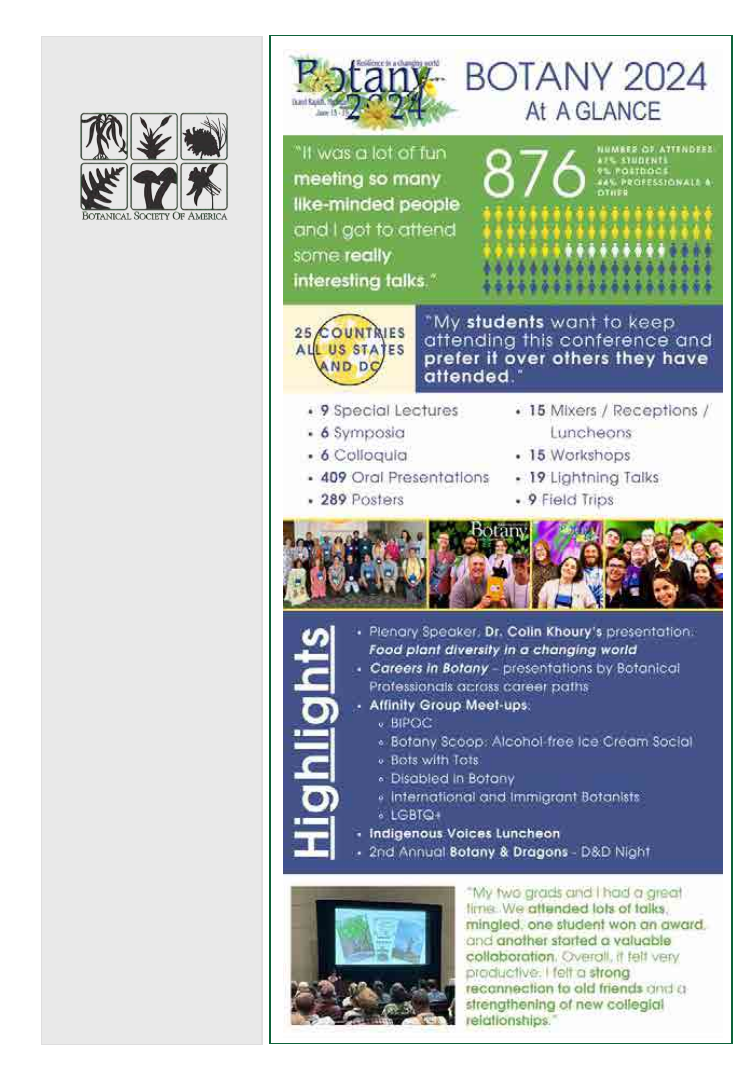
The Botanical Society of
America is a membership soci-
ety whose mission is to: pro-
mote botany, the field of basic
science dealing with the study
& inquiry into the form, func-
tion, development, diversity,
reproduction, evolution, & uses
of plants & their interactions
within the biosphere.
ISSN 0032-0919
Published 3 times a year by
Botanical Society of America, Inc.
4475 Castleman Avenue
St. Louis, MO 63166-0299
Periodicals postage is paid at
St. Louis, MO & additional
mailing offices.
POSTMASTER:
Send address changes to:
Botanical Society of America
Business Office
P.O. Box 299
St. Louis, MO 63166-0299
bsa-manager@botany.org
The yearly subscription rate
of $15 is included
in the membership
Address Editorial Matters (only) to:
Mackenzie Taylor, Editor
Department of Biology
Creighton University
2500 California Plaza
Omaha, NE 68178
Phone 402-280-2157
psb@botany.org
Plant Science Bulletin

Explore new solutions for climate change mitigation,
soil health, and crop yield and disease investigation.
Join Us
Invited keynote speakers
Selected talks with panel discussions
Hands-on workshop and demonstrations
Poster sessions
Optional local field trips
A global conference featuring:
Early registration rates are
available until December 1, 2024.
February 24-27, 2025
Tucson, Arizona, USA
licor.com/connect
Register Now
 View on Issuu.com